
Catania: 30th & 31st July
Arriving in Catania airport at 1am, after a two-hour delay at Heraklion, was quite a bizarre experience. It was late, admittedly, however, to be waved through immigration without any of our Covid tests, passports or passenger locator forms once being checked felt like a bit of a dereliction of duty given the global situation and, moreover, the trouble and expense we had gone to get the tests and forms filled in and printed – in order to adhere to the ‘strict’ guidelines set by the Italian authorities. Anyway, we were not overly fazed or disappointed to be in Italy with so few obstacles and, in fact, were happy that having taken off two hours late, we managed to make up so much time at the other end!
Having never been to Sicily, and not wanting to miss Italy entirely during our time in Europe, it was a logical place to travel to from Crete while we pondered where best to move on to when our 90 days in the EU were up. As it is another Mediterranean island, Sicily allowed us to remain away from the mainland which we felt would be less Covid-stricken than mainland Italy which looked to be in the midst of another wave. It also enabled us to factor another European country in to our travels and both Nneka and I were adamant it should be Italy if we could make it work. Spending such a sustained period of time in Europe without visiting our favourite country (given we had missed so many other contenders: France, Spain and Austria to name but a few) would have been a great shame.
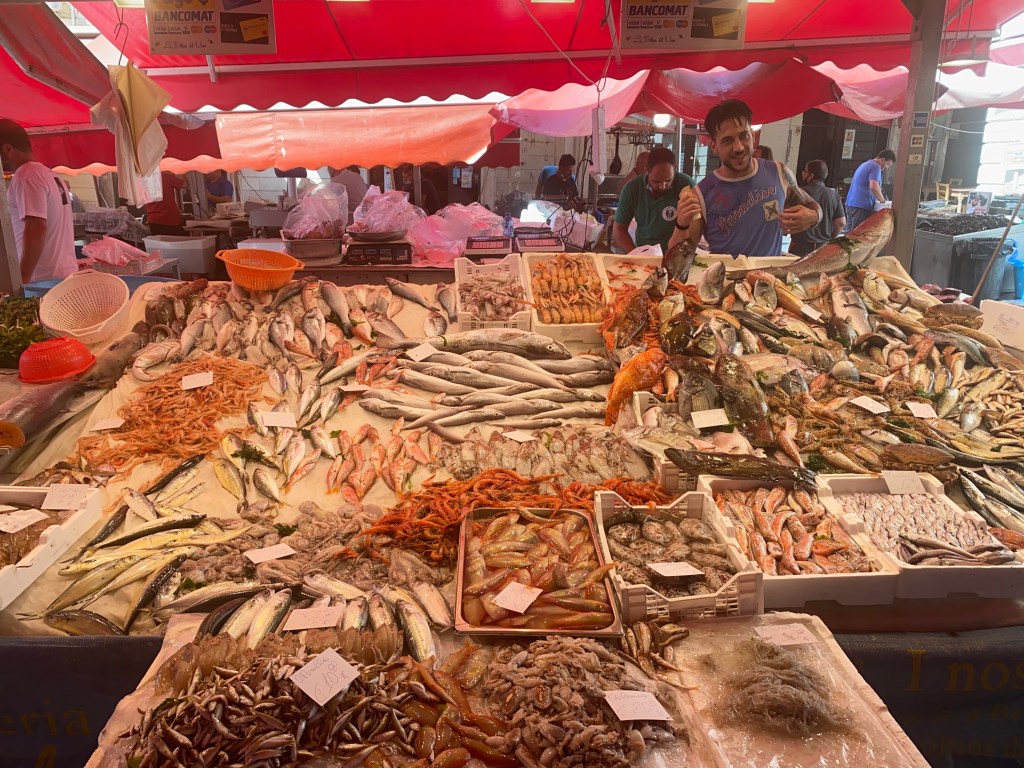
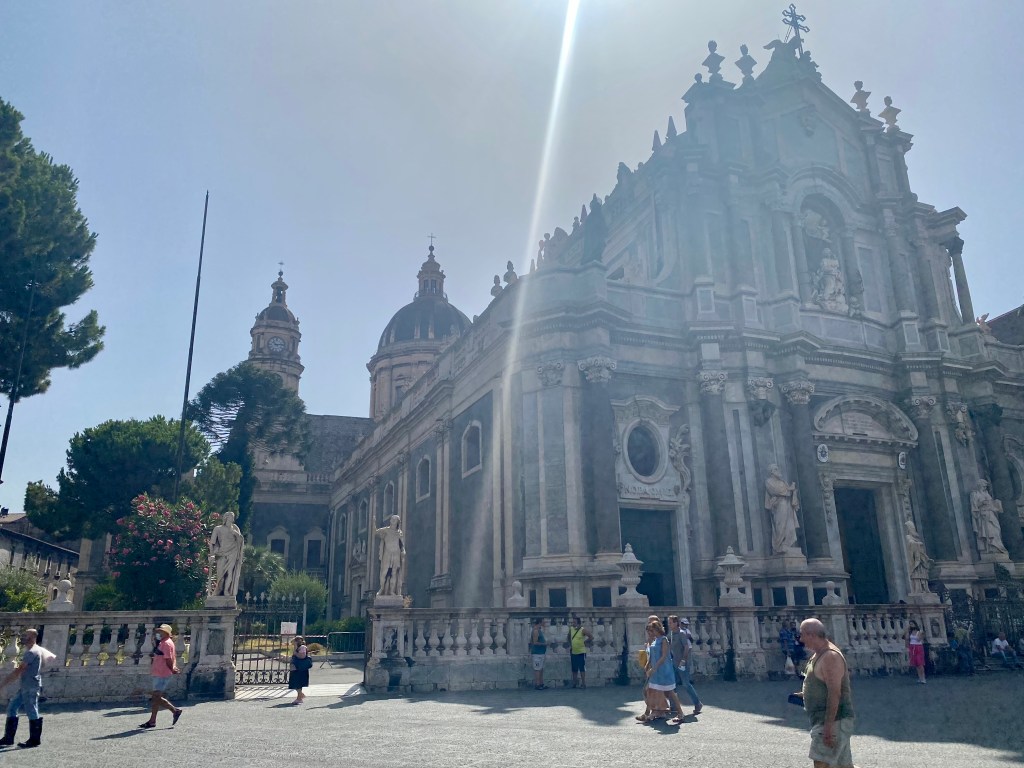
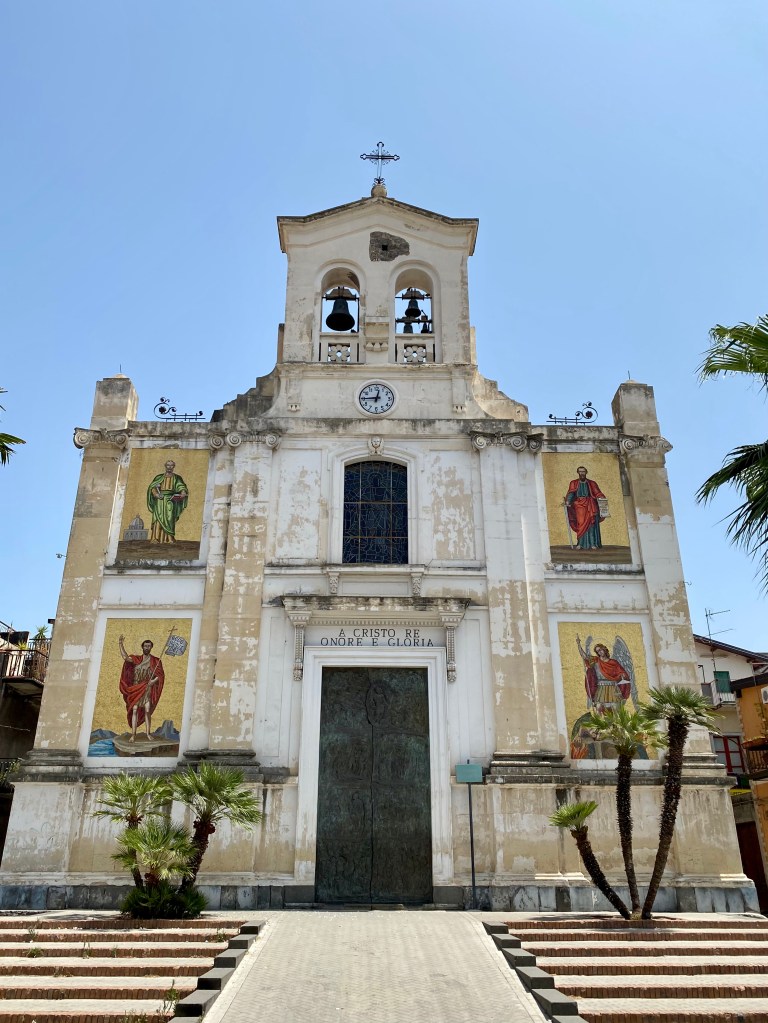
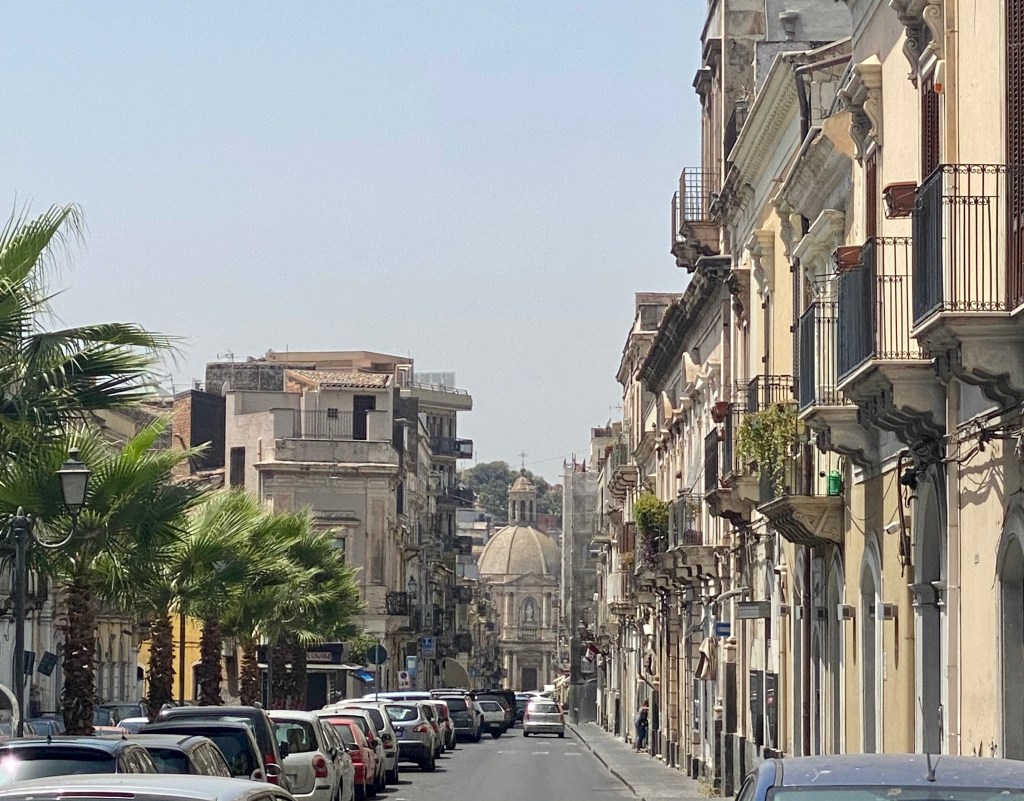
Our initial observations of Catania were surprisingly positive given we had read some fairly uncomplimentary reviews (both online and in well-respected travel guides) – this is likely to be attributable to our love of Italy and all things Italian. We had read it was a ‘dirty port town’ with a ‘large petrochemical plant to the south’, but this, for us, did not characterise the city nearly so much as the beautiful streets, grand architecture and inimitable air of self-confidence that epitomises much of Italy – in our opinion, quite rightly.
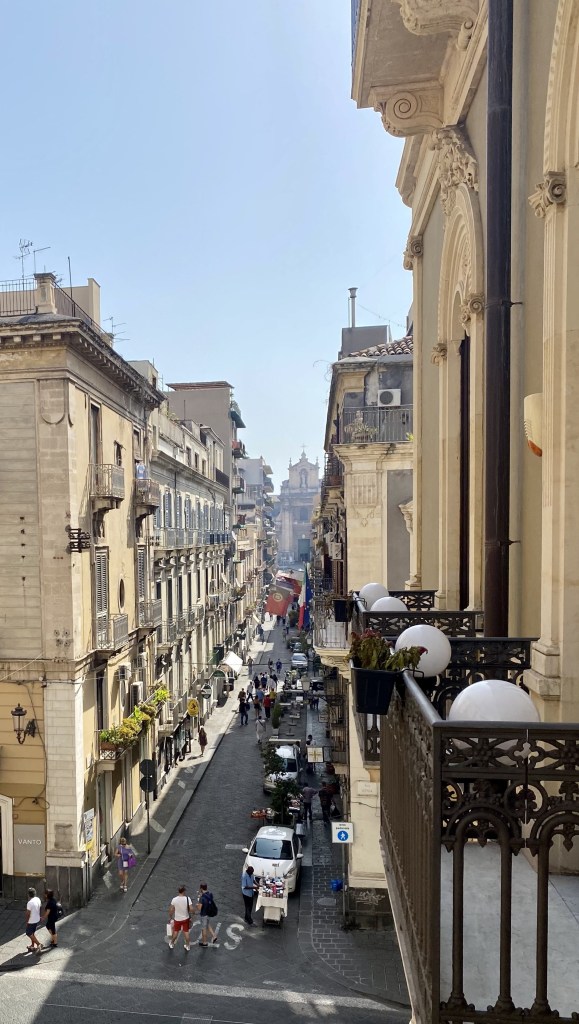
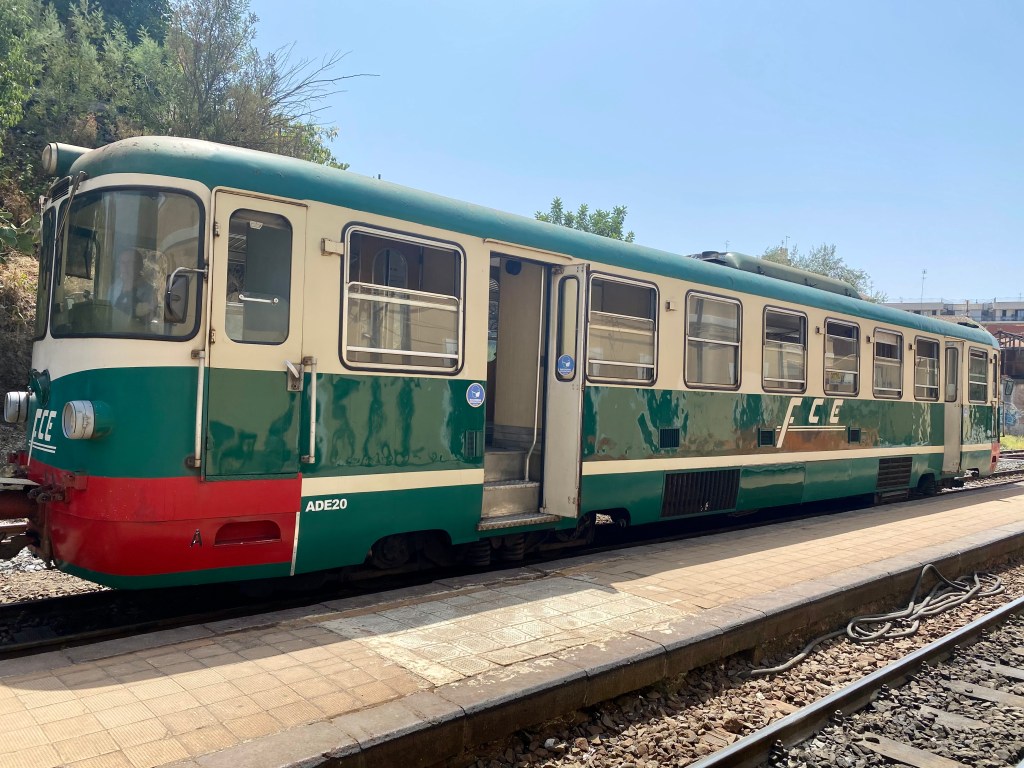
The streets of Catania look dirty, primarily because they lie in the shadow of Etna, Europe’s most active volcano (80 eruptions measured during the 20th century), and so the pavements are strewn with volcanic dust which, unavoidably, makes them look a little dirty. But it is only superficial. We found Catania to be a really quite pleasant place, rich culturally, historically (it has a 2nd century amphitheatre restored just north of the central square) and architecturally. It also boasts – and this is a little geeky – it has a wonderful single-carriage train, the Ferrovia Circumetnea, which has a terminal in central Catania and, as the name suggests, circumnavigates the base of Etna joining with the main coastal line at Riposto, about two thirds of the way to Taormina.

Taormina: 31st July – 7th August
Being aware we only had three weeks to see of much as Sicily as possible, we had drawn up a plan to see as much as we thought possible by train. This meant spending two or three nights in most of the places we intended seeing with our only four-night stays being Taormina and Palermo which were given special dispensation. We checked in to our hotel at around 4pm and quickly headed out for a wander around and by 8pm, over supper, we had already started to discuss which of the other (now potential) destinations we would sacrifice to extend our stay in Taormina.
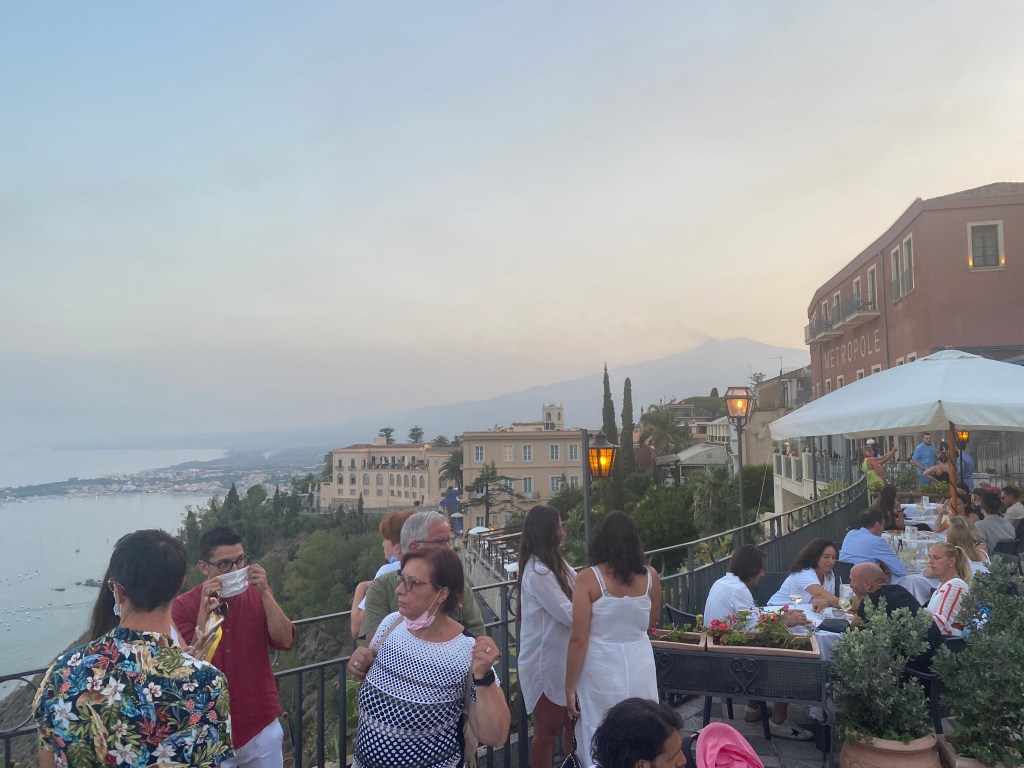
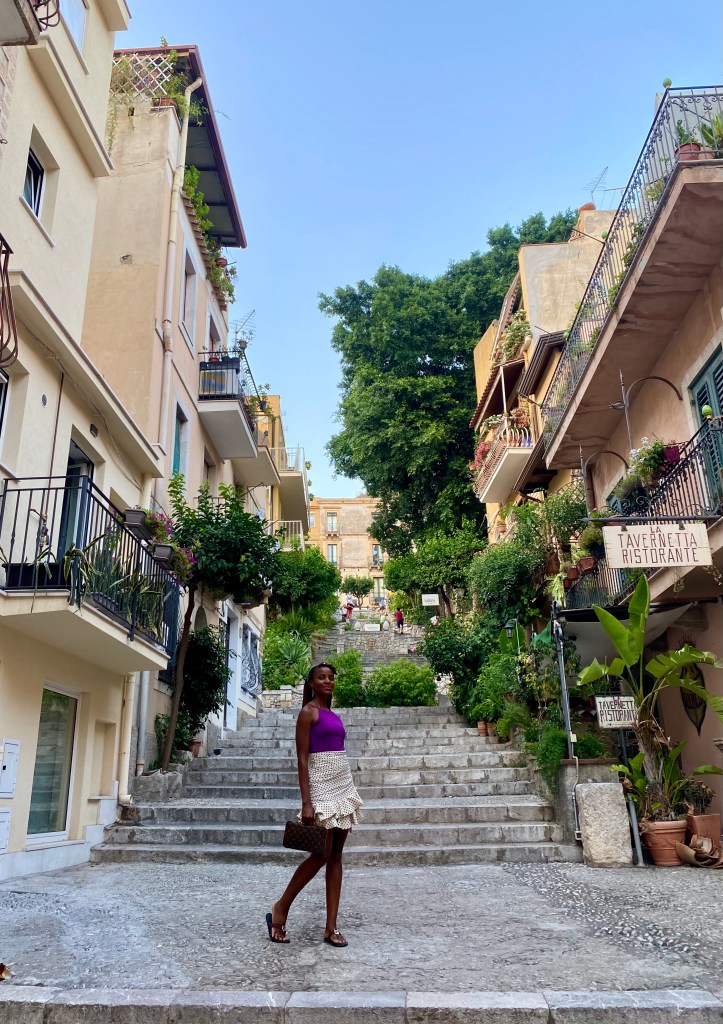
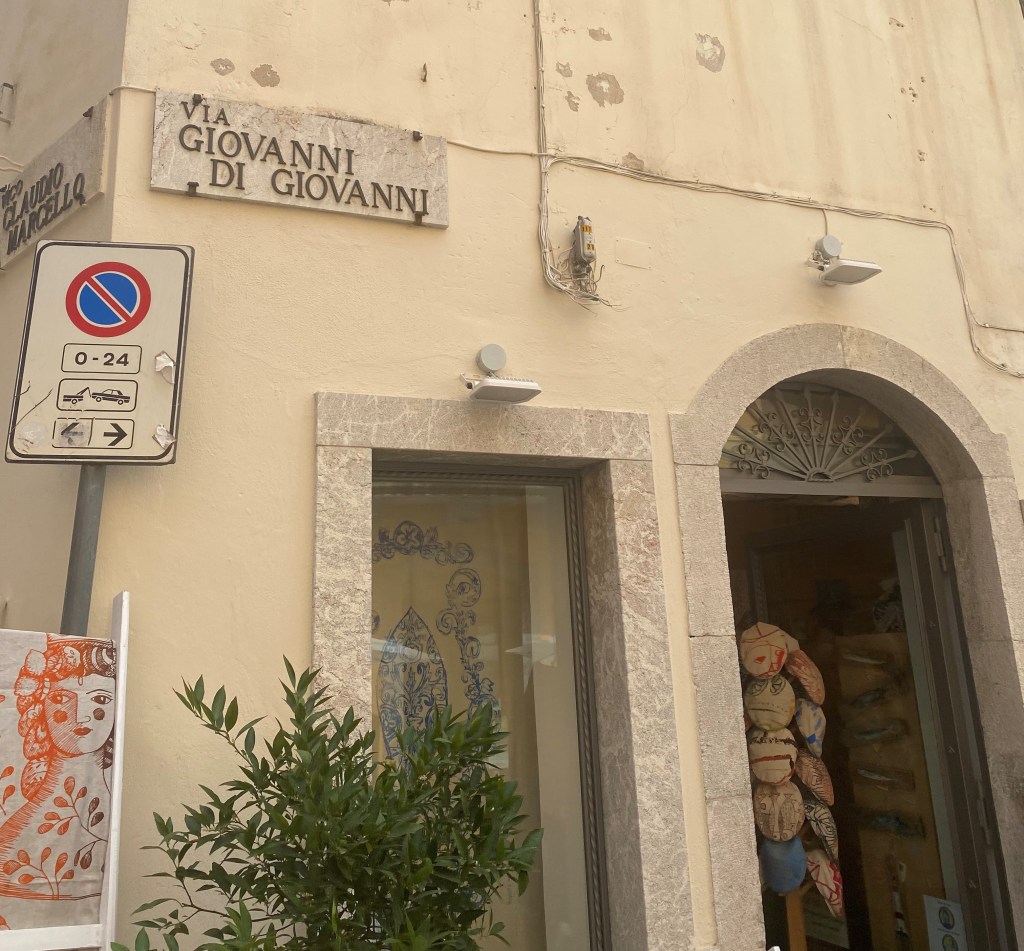
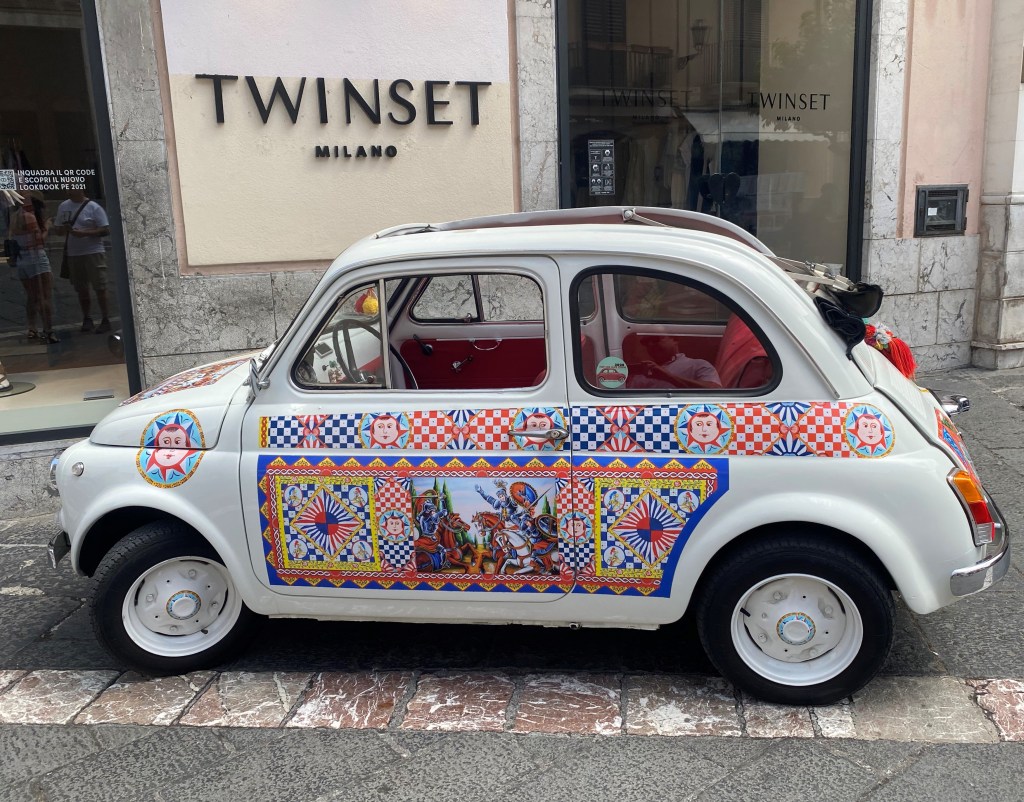
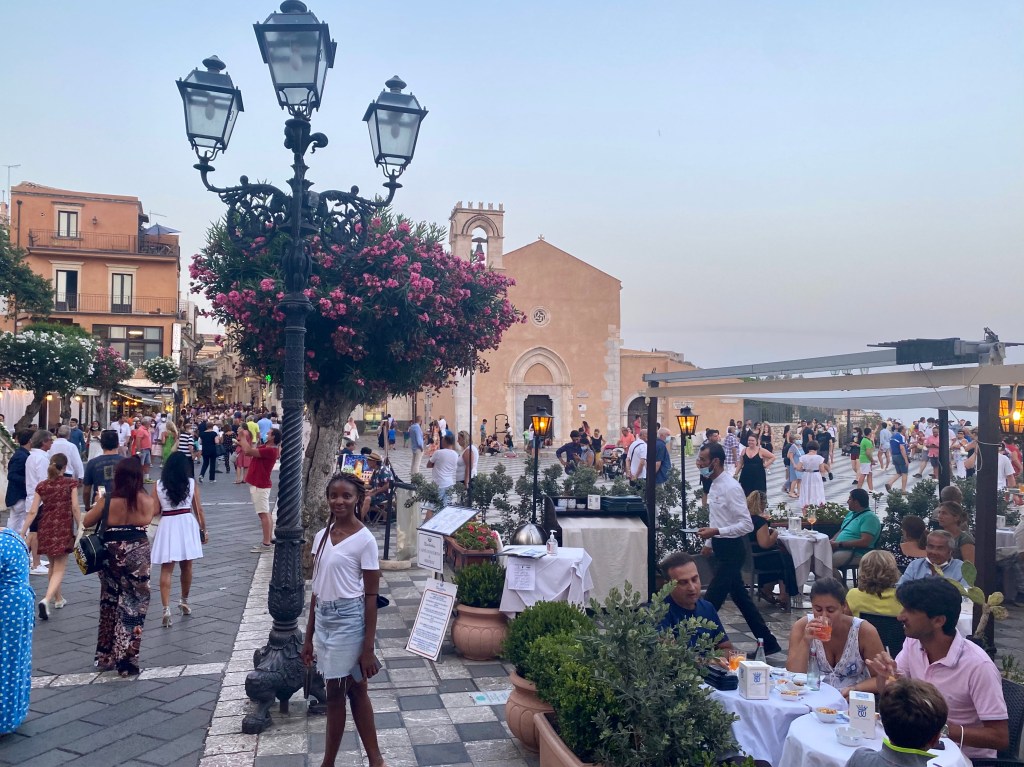
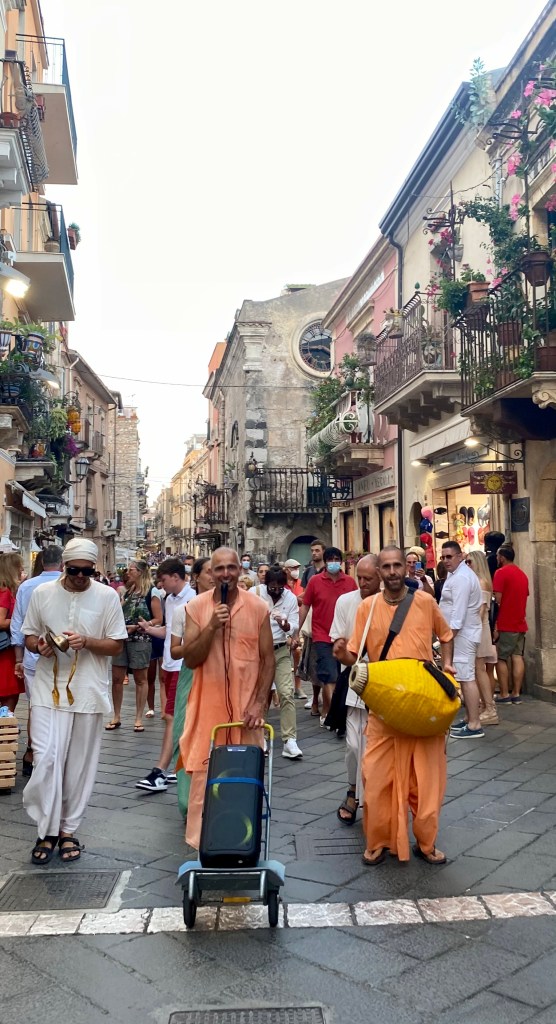
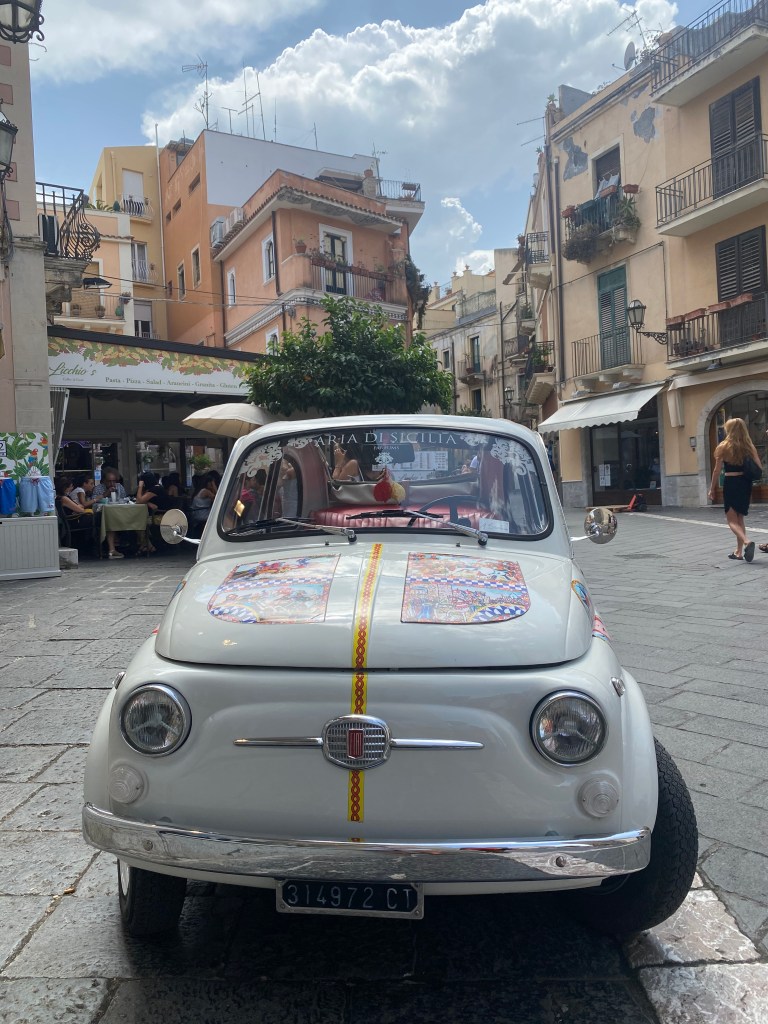
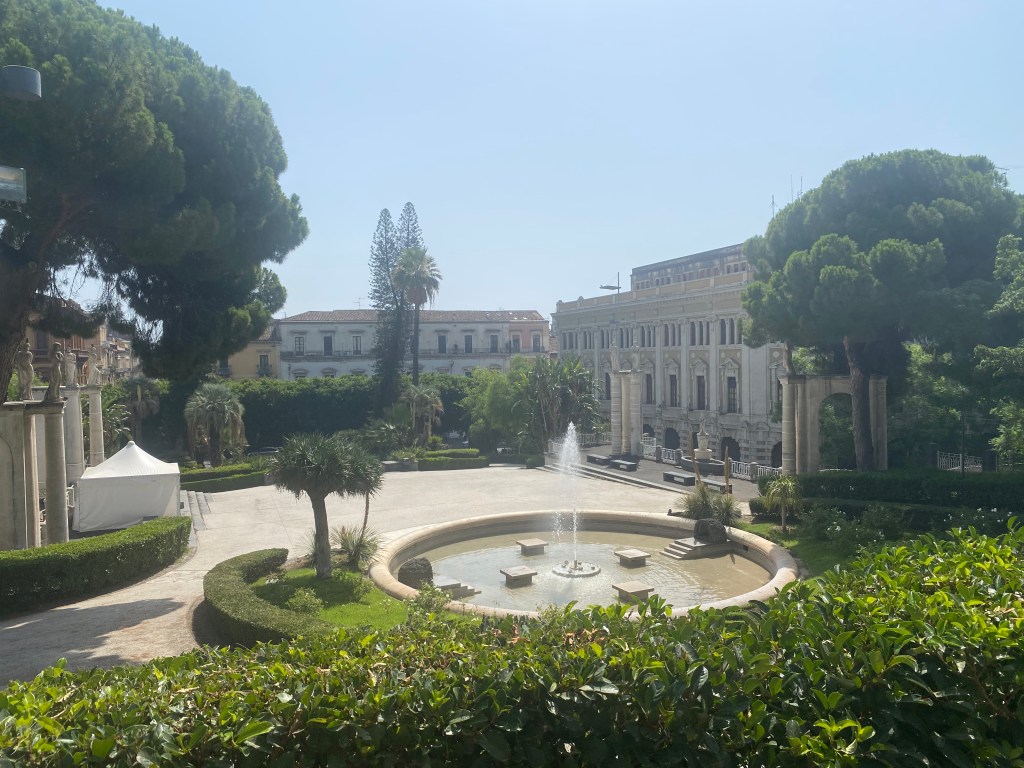
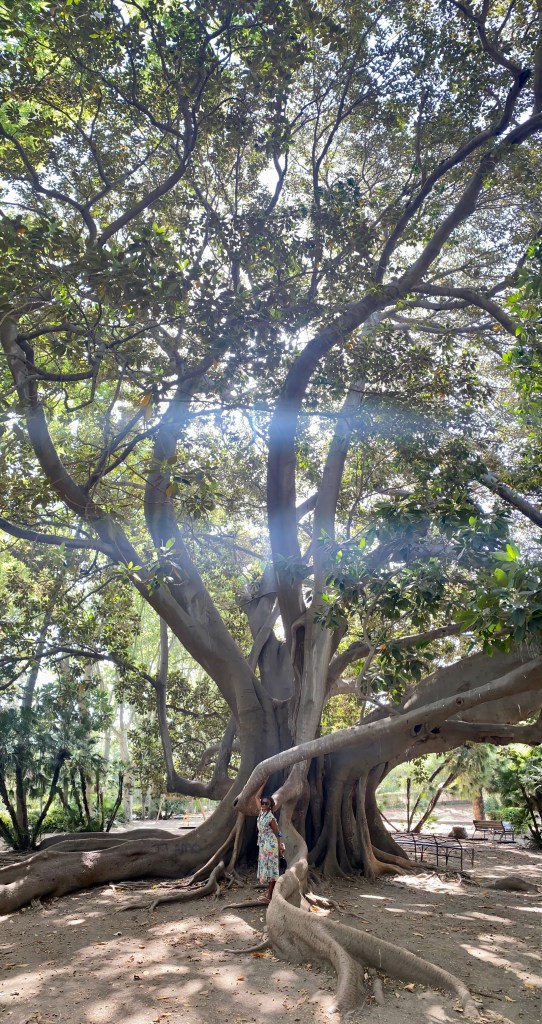
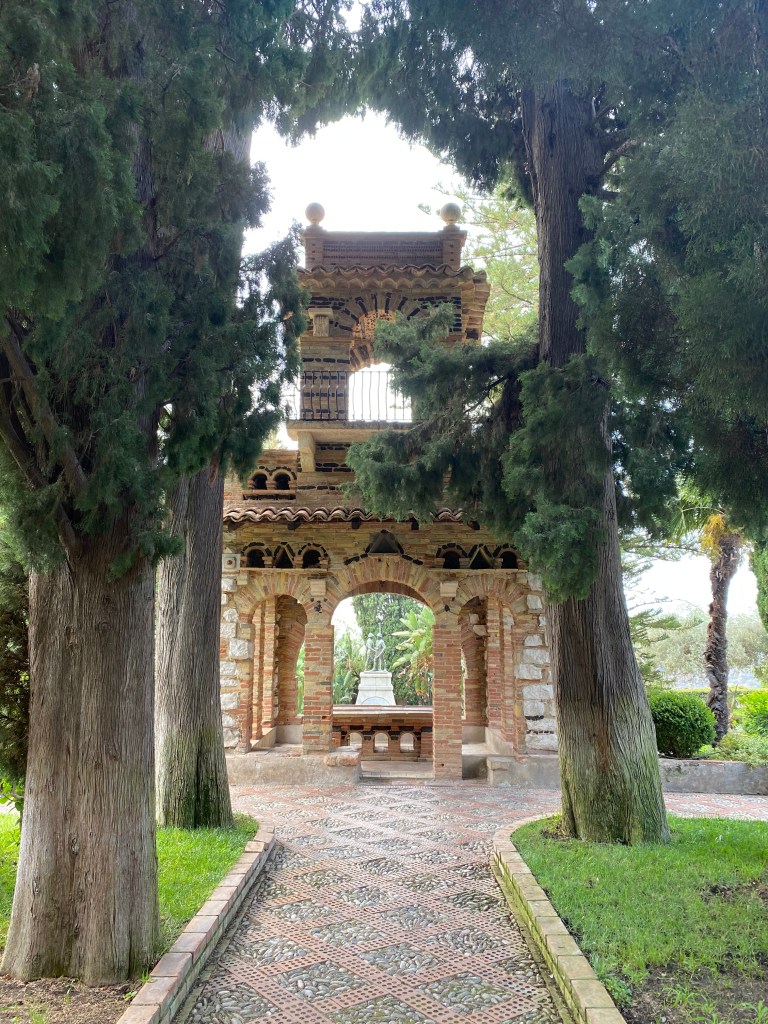
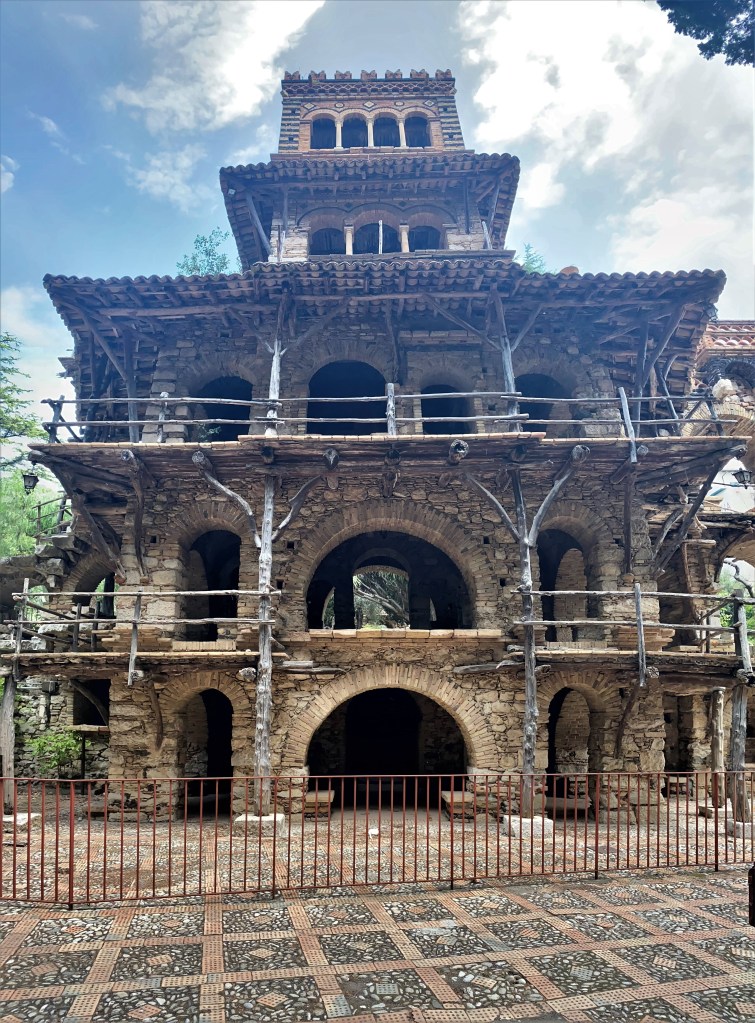
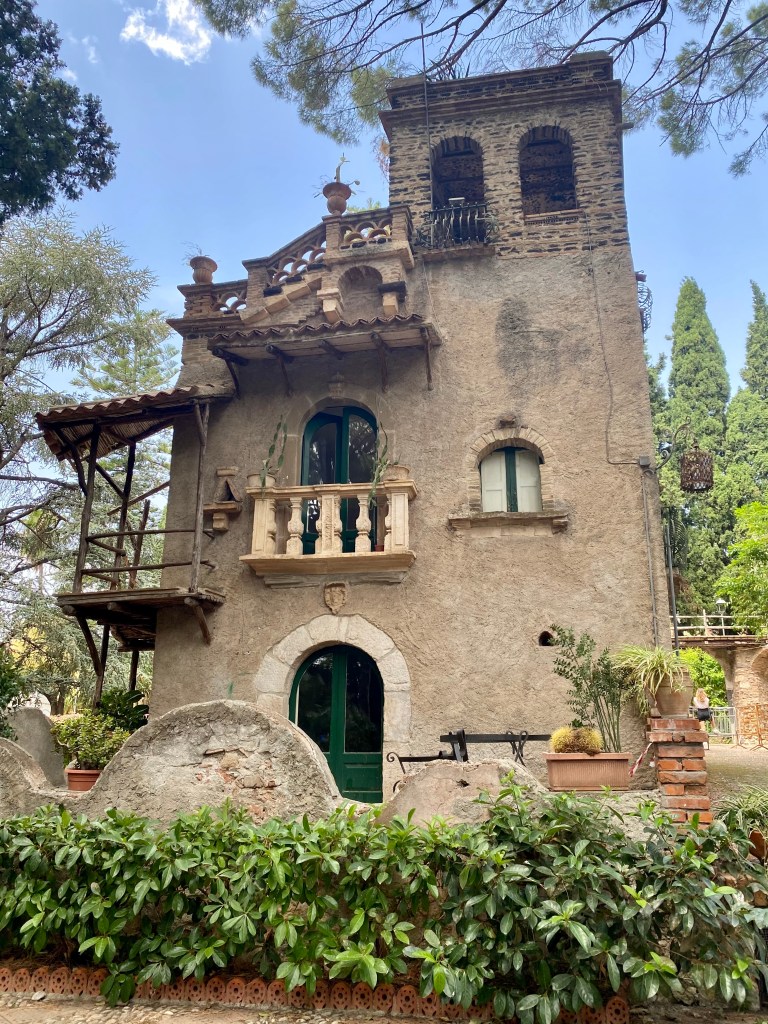
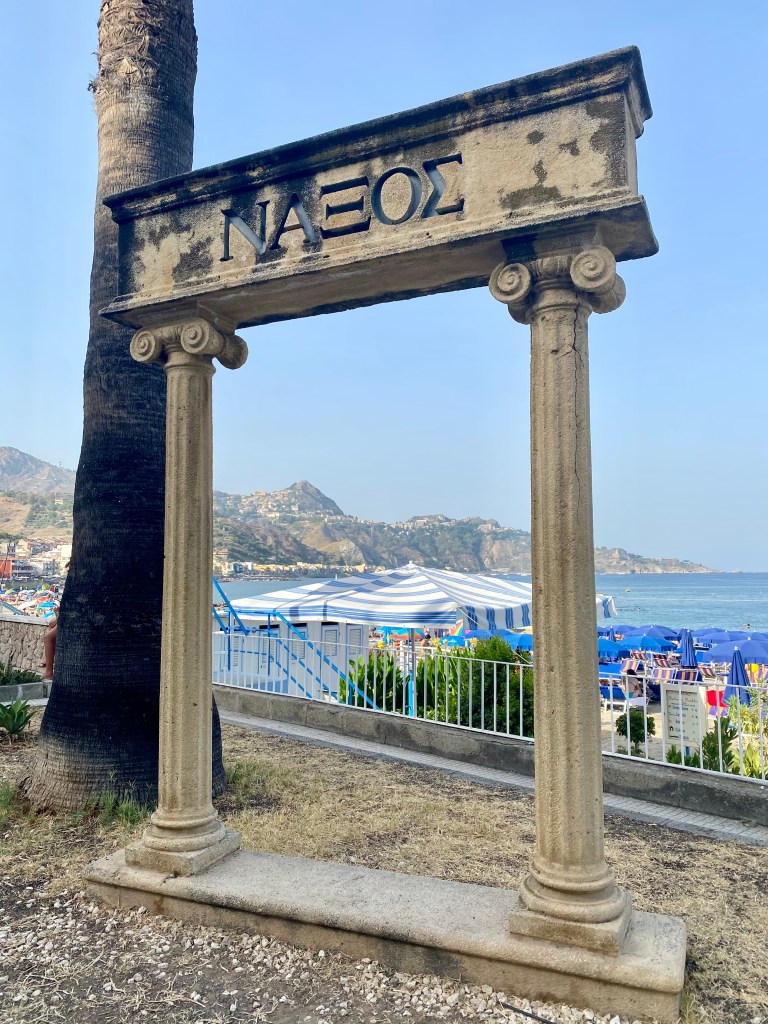
Our four days in Taormina were not particularly varied but nor were they boringly samey. Our mornings were spent strolling around drinking coffee before it got too hot to do so, at which point we sought refuge in our hotel until late afternoon when the sun was beginning to disappear behind Etna. In spite of being a small town, Taormina is sufficiently varied to be able to wander around the small streets – with the usual abundance of cafes, restaurants and bars – parks, historic landmarks (both pictured below) and nearby hill villages without seeing anything but the main street and glorious views of Etna and the coastline below. It also has some interesting characters wandering around – some of whom are the owners or passengers of the dozen or so superyachts in the bay and some of whom are just plain fun to watch for a multitude of reasons. We spent hours people-watching, as clandestinely as possible, from behind a beer or Aperol Spritz in the town’s main piazza. By then, it was also really starting to heat up on Sicily with daily peak temperatures hitting the low to mid-forties Celsius so, when we decided to extend our stay, rather than remaining up in the hills – a frustratingly long and busy cable car ride away from the beach – we opted for an Airbnb right on the seafront in a place called Giardini Naxos (we later discovered it was named after Naxos, the Greek island where we had been some six weeks prior).
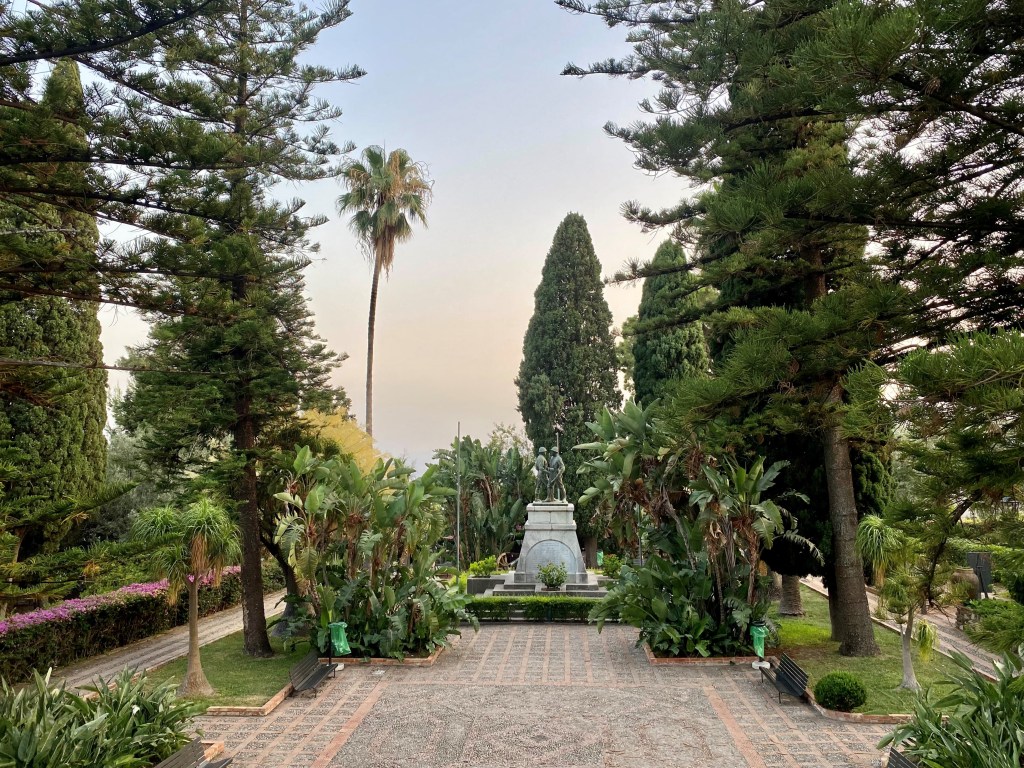
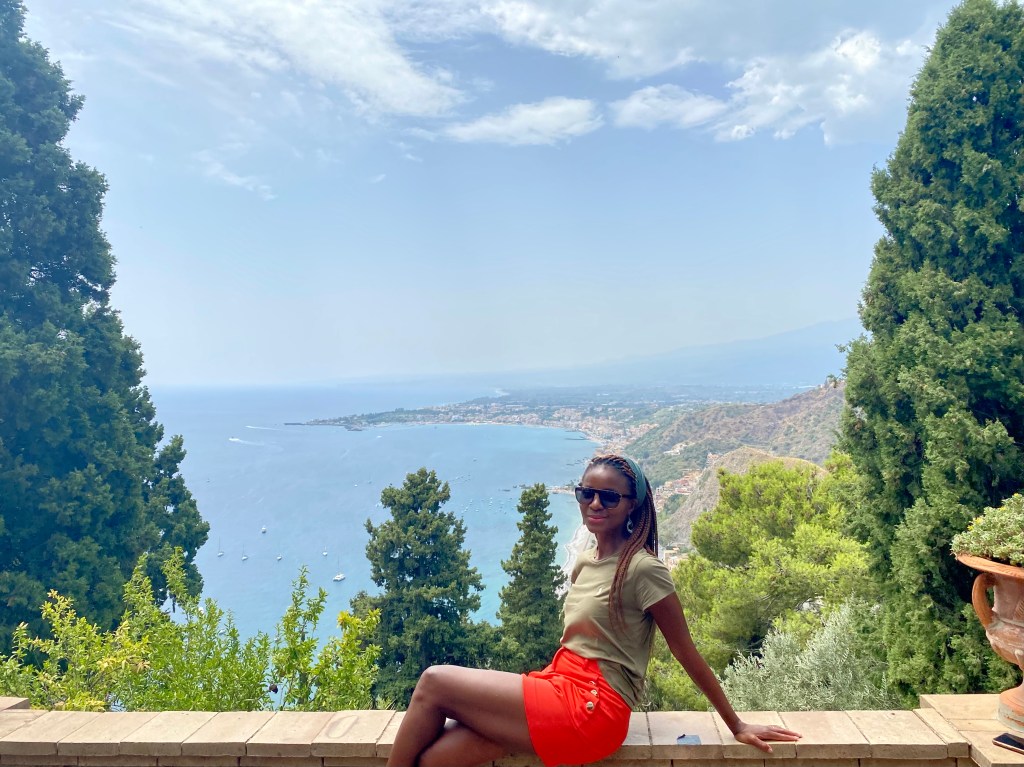
Giardini Naxos is only a few-hundred yards from Taormina as the crow flies – it is somewhat further down the hairpins of the Sicilian roads. This said, the vibe is very much different with many more locals than tourists on the streets resulting a calmer and more genuine feel, both on the streets and in the cafes, restaurants and bars. The calmer vibe was further improved by being a 200-yard walk to the beach, frequented almost exclusively by locals and Italian holidaymakers. Only early in the morning was the sea anywhere near refreshing in temperature. By mid-morning the shallows were tepid and, in the afternoon and evening, like swimming in a bath.
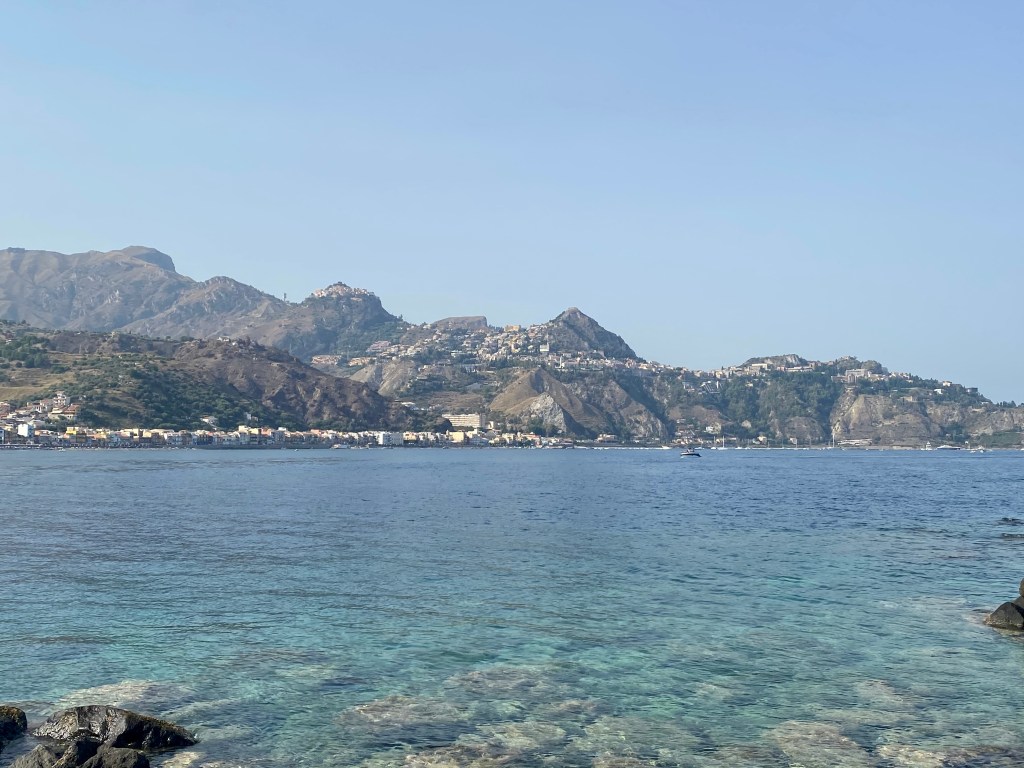
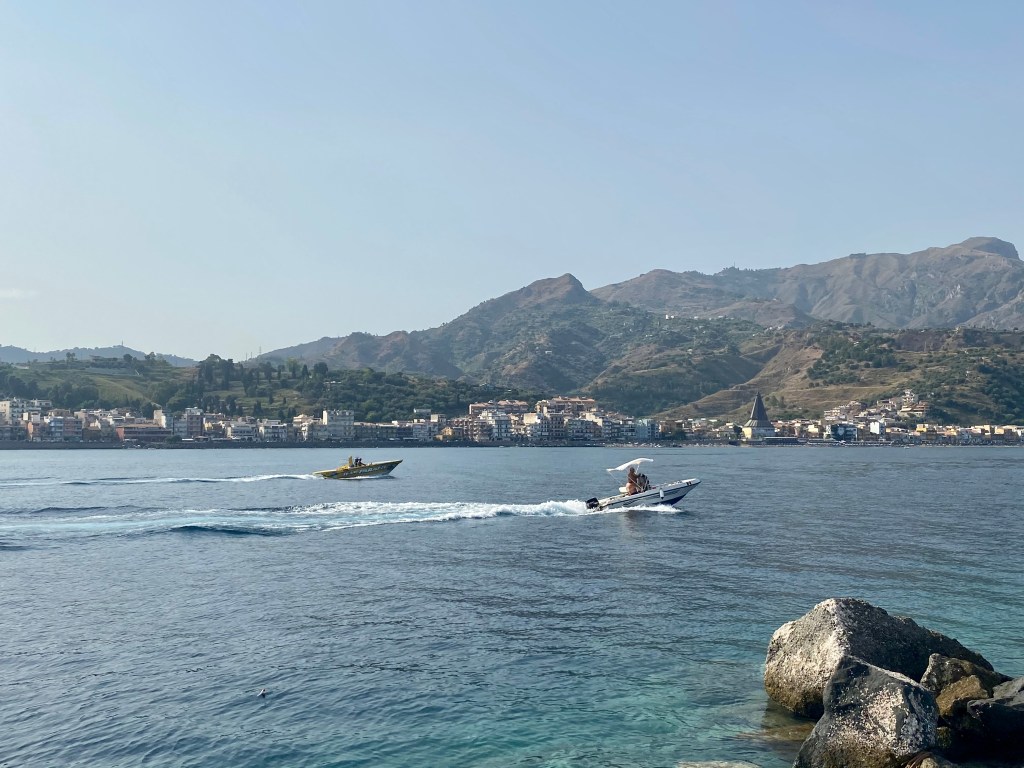
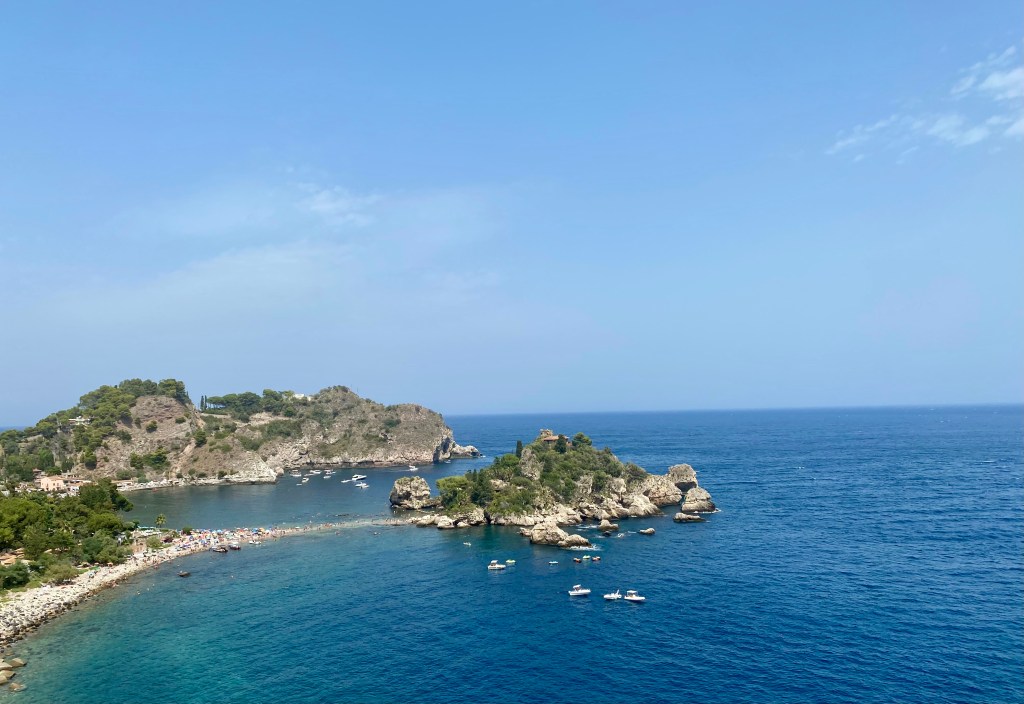
Being away from Taormina, albeit only a few hundred yards, we were able to shop and dine with the locals. This meant that we ate at home a few times – the local butcher and delicatessen were first rate – and, when we at out, it was a fraction of the cost of a meal up the hill and of a similar quality – in some cases better – than it had been in the posh restaurants. The four impromptu days we spent in Giardini Naxos were some of the best we have spent so far on this trip and, should we ever return (we definitely plan to), we will spend time both up the hill in Taormina and by the beach as we did on this trip, and would recommend this combination to anyone wishing to spend a couple of weeks on Sicily.
Palermo: 7th – 11th August
Train travel around Sicily was pleasant. The trains were modern, punctual, not overcrowded (most of the time), air conditioned and, with the exception of a couple of cross-country tracks, skirted the beautiful coastline so we spent most of the time just chatting and looking out of the window at beaches and the Med on one side or mountains, scorched hills, lemon groves or vineyards on the other. The journey to Palermo took us up to Messina, at the north-eastern tip of Sicily, where we changed after an hour’s wait to travel west to Palermo. The second leg took us through Cefalu (one of the destinations we had jettisoned in favour of a longer stay in Taormina) so those few minutes were somewhat bittersweet as it looked as pristine and impressive from the train as it did in the pictures online.
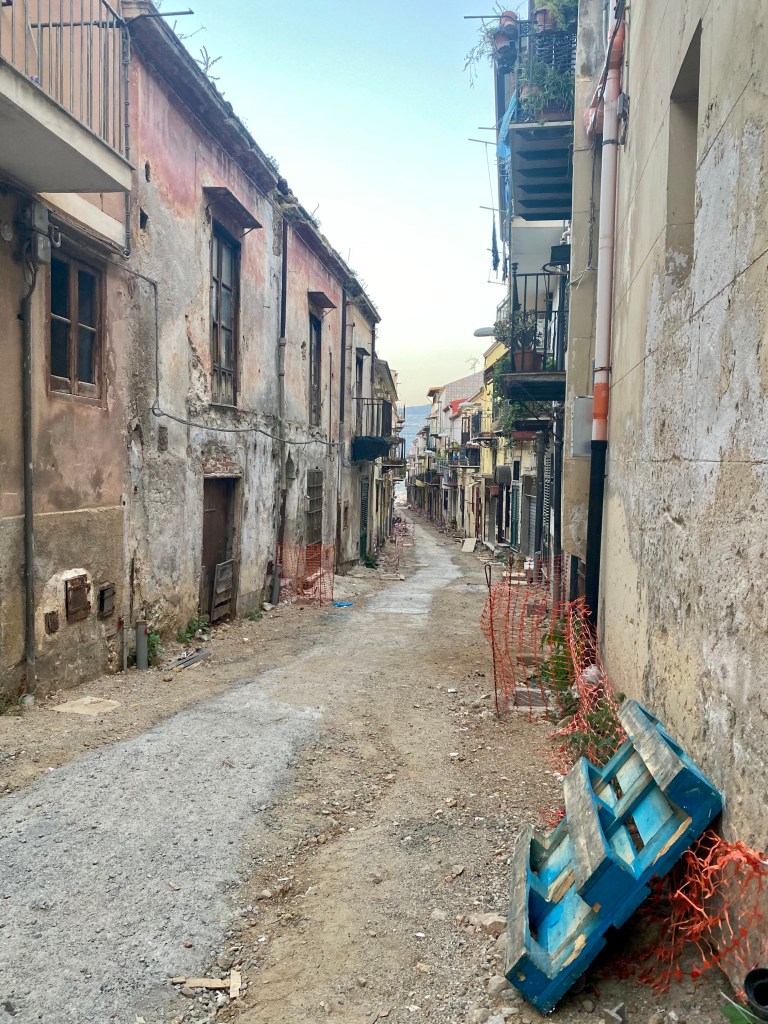
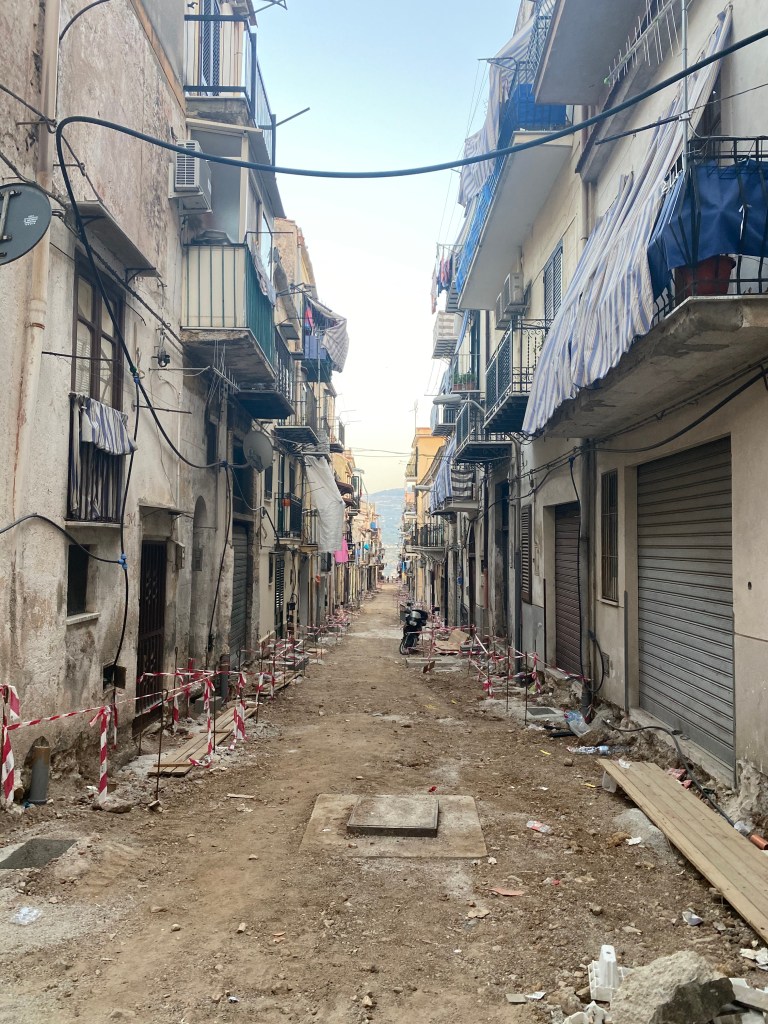
The very same guidebook which had been critical of Catania’s aesthetic qualities also had given Palermo a fairly rough ride, so we took it with a pinch of salt. But we needn’t have. Palermo, at least superficially, seemed to embody the diametric opposite of Taormina (relaxed, chic, tidy, considered, clean) in virtually every regard. In the ten-minute walk to the Airbnb from the station we saw more rubbish, graffiti, dead birds – by now it was so hot, they were starting to fall from the sky, exhausted – and were harassed more than we had in the entire trip to this point. It went through both of our minds (we later discussed, as we were too intimidated to do so at the time) whether we should just cut our losses and head back to the station and board the next train back to Cefalu. But, as the expression states: ‘nothing ventured, nothing gained’. This, in addition to the fact some of our favourite cities are amongst the filthiest we’ve ever visited – London (on a bad day) included – encouraged us to soldier on to our lodgings.
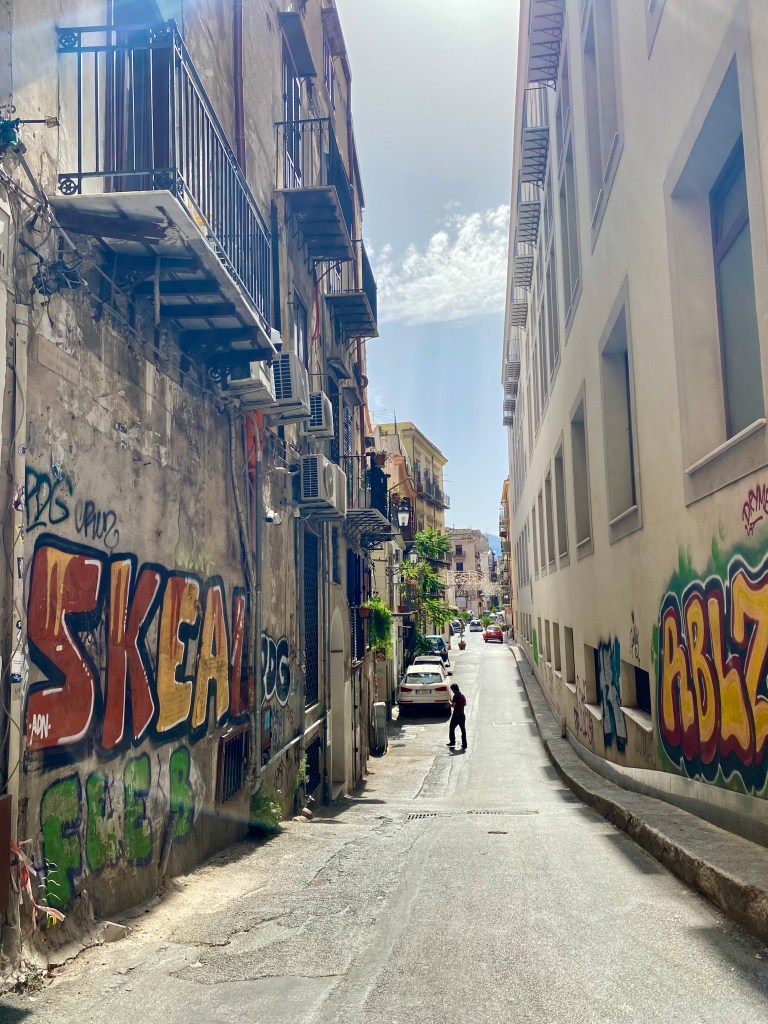
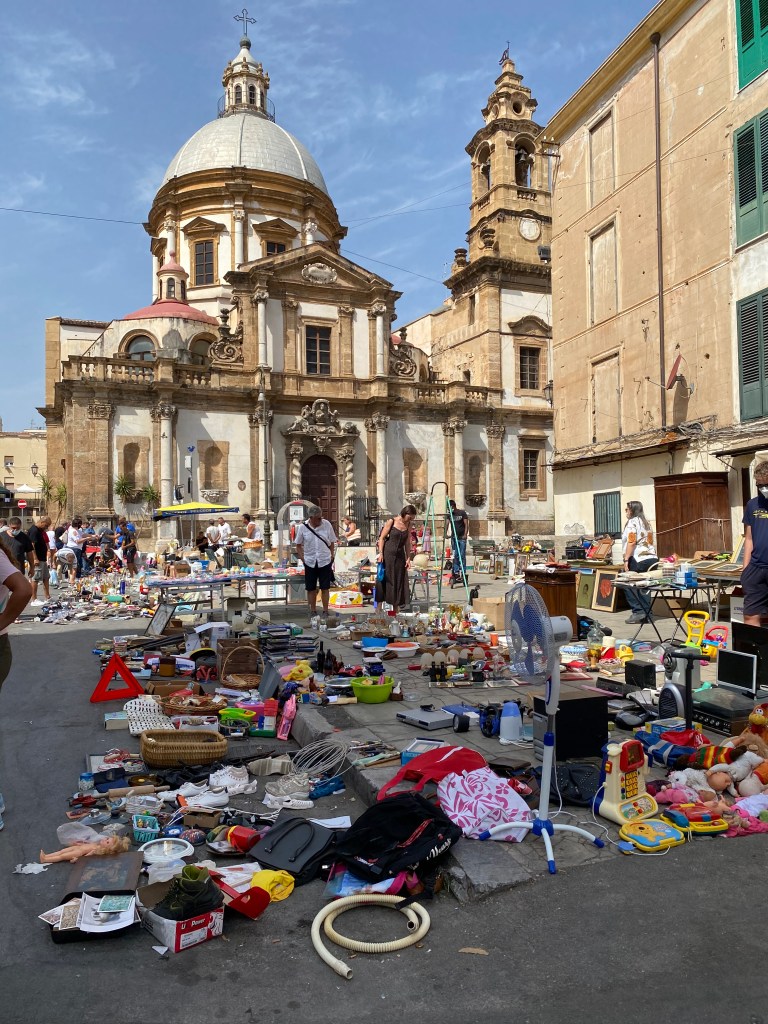
We had arranged to stay in an Airbnb in the middle of the central Palermo – at an Sicilian artist’s apartment – so after checking in, cooling down and meeting our host, we felt calm and collected enough to head back out to the chaos. After a couple of hours taking in some of the markets and monuments, moving away from the train station to the tourist trail, we realised Palermo’s bark was worse than its bite. And, if one was able to look beyond the graffiti and squalor, some of the older buildings and landmarks were very beautiful, and the town vibrant and exciting. It was probably only not having been in a large city for so long that caused our initial aversion to its ‘charms’.
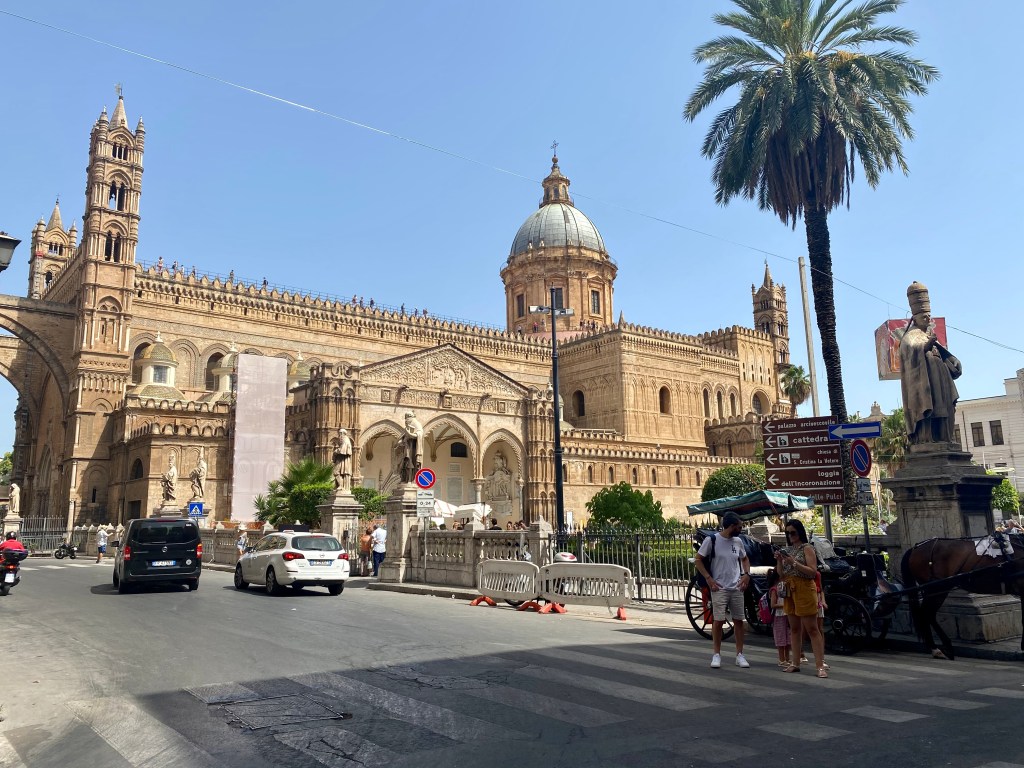
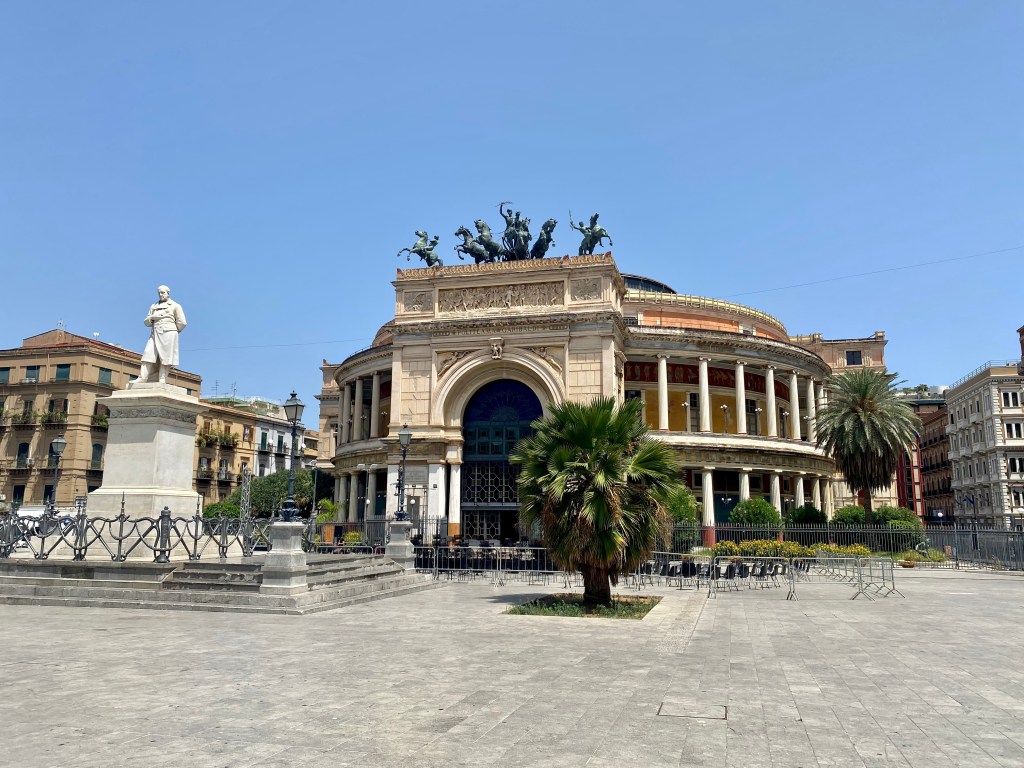
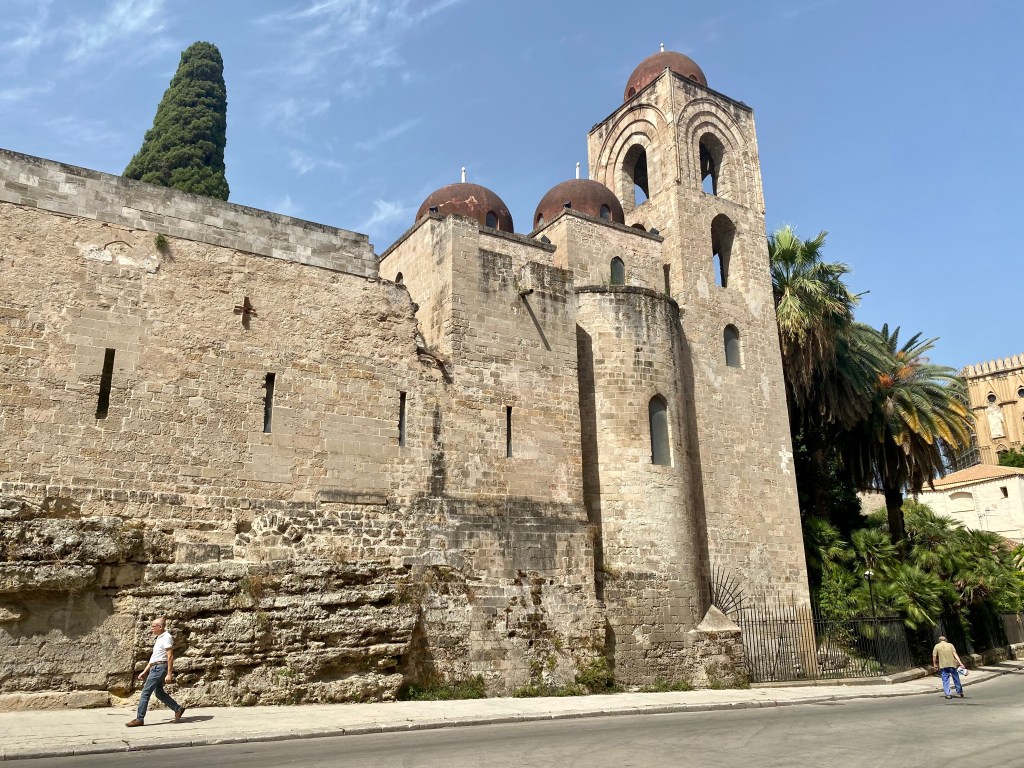
Most of Palermo’s historic sites were situated in the centre, which is relatively small and can easily be looked around in two days. There was also a more modern centre, where the university, upmarket shops and a central suburbia were. This was more ordered in terms of layout and felt much less claustrophobic to wander around. The avenues were wide and separated into normal traffic, public transport and bike lanes, the latter two hardly being used by their intended vehicles at all, instead giving way to scores of electric scooters, both private and available to rent with an app and a smartphone, and these were a fun – and relatively safe, due to the dearth of other traffic – way to explore this larger part of town. We spent an afternoon tootling up and down the grids checking out the marina, street stalls and generally just enjoying seeing the city but without walking another half-marathon which seemed to be our daily average when we set off somewhere on foot.
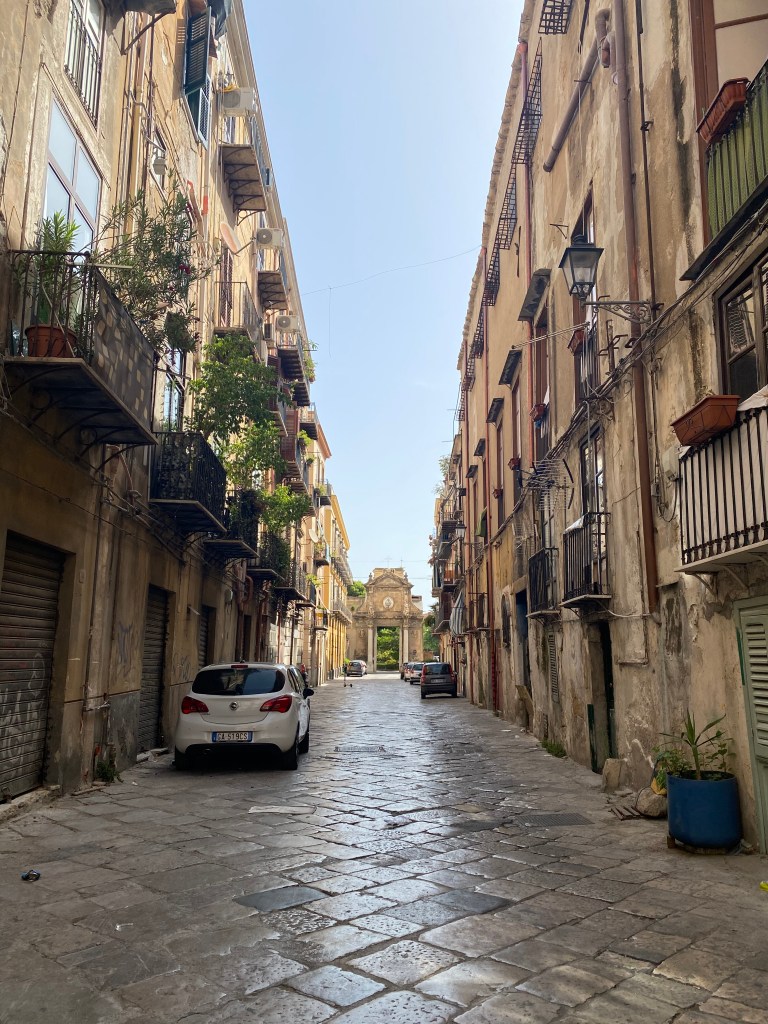
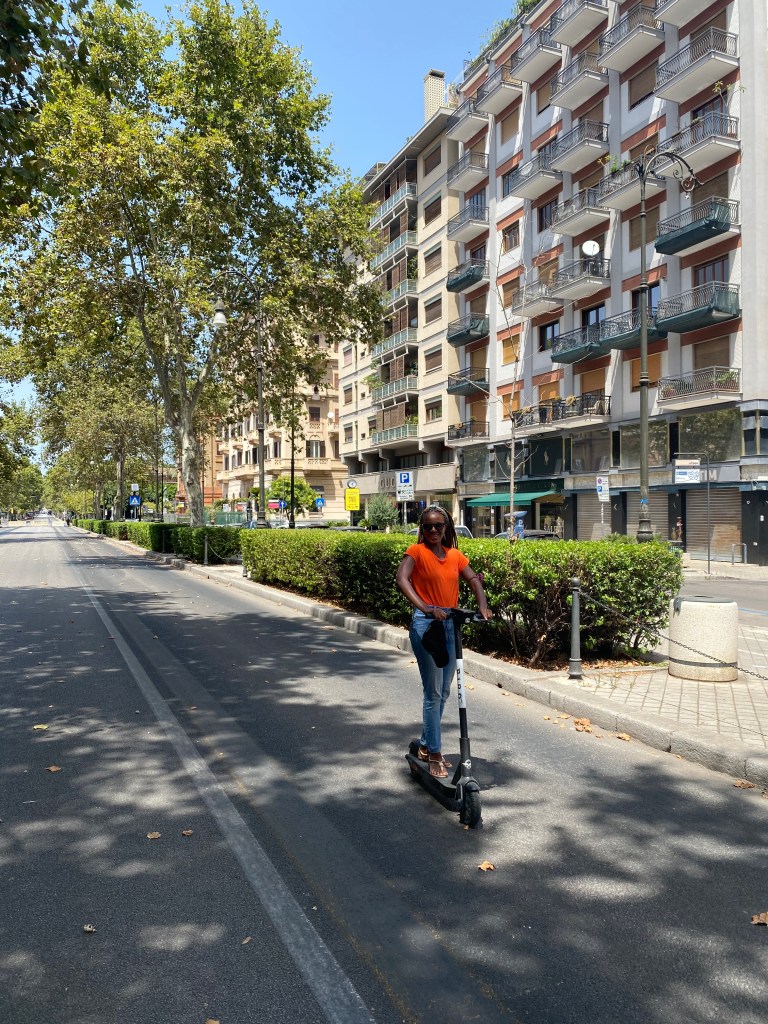
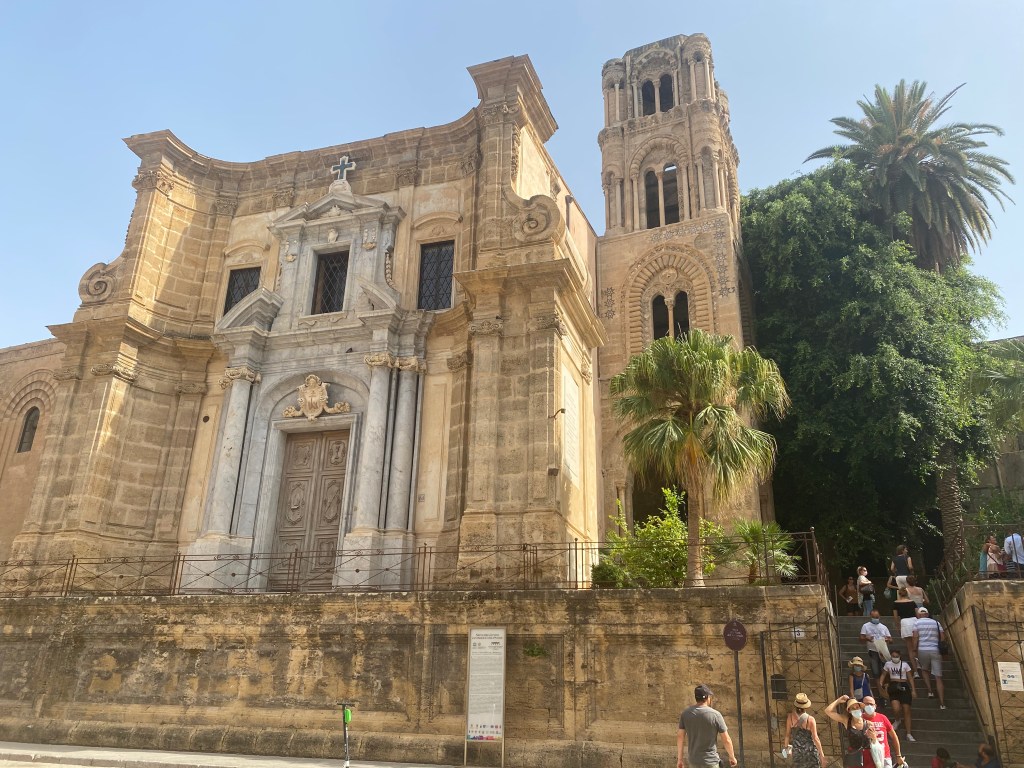
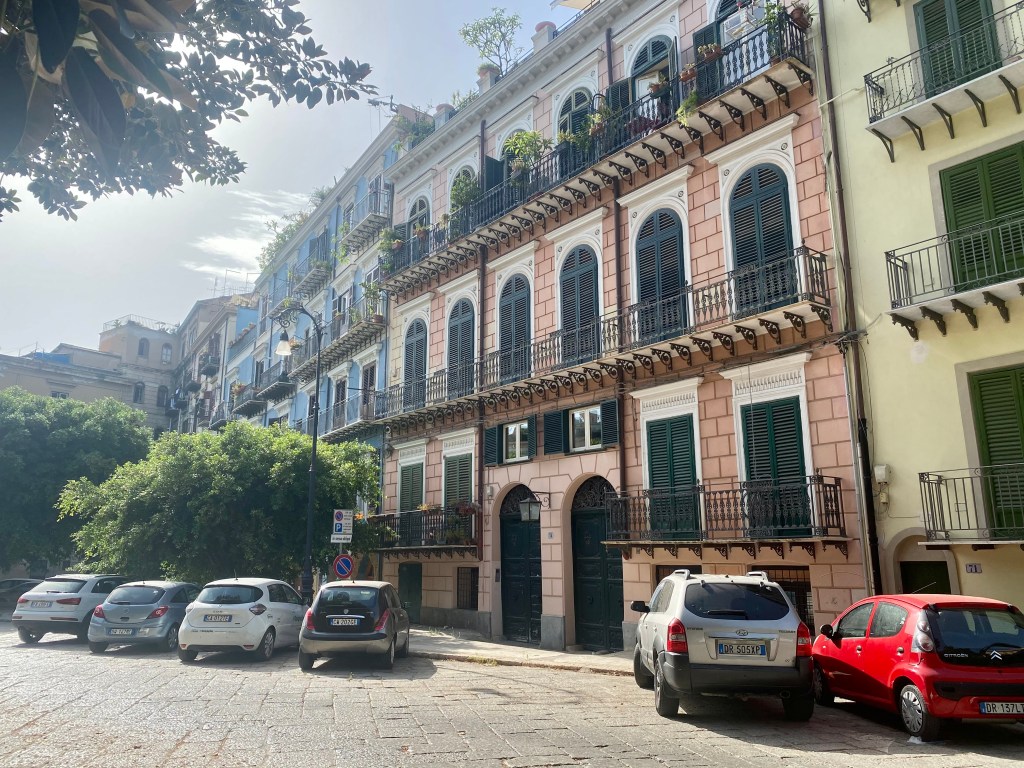
On our final day in Palermo, on the basis of a recommendation by our host, we decided have dinner in a place called Monreale which is about five miles out of town. Judging by the journey we endured, I strongly suspect she was not expecting us to walk there – and for good reason. Not only was it still incredibly hot and humid when we set off (my iPhone said it ‘felt like’ 40c halfway through the walk at 6:40pm) but, after having left the old centre, we hit the residential outskirts to the north which made for a pretty harrowing half hour as we traversed narrow unpaved roads with piles of rubbish at both ends, which looked as if it had not been collected in months, and avoided the gaze of most passers-by, walking, as one does in such situations, extremely confidently but ready to go in to fight or flight mode at any moment. We arrived, drenched from the exertion of a five-mile uphill walk, just in time to see the sunset light over Palermo.
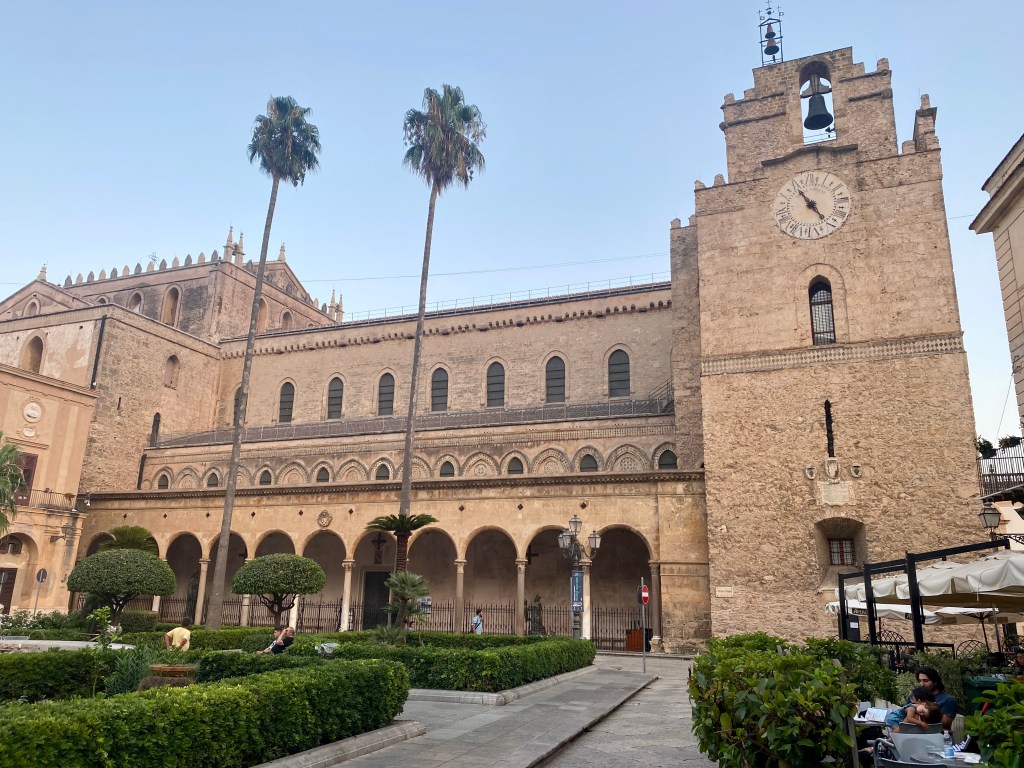
Monreale was very picturesque, and its town hall and cathedral were quite spectacular. We had a look around and lovely meal there before negotiating a fare back with the only local taxi.
Ragusa: 11th – 14th August
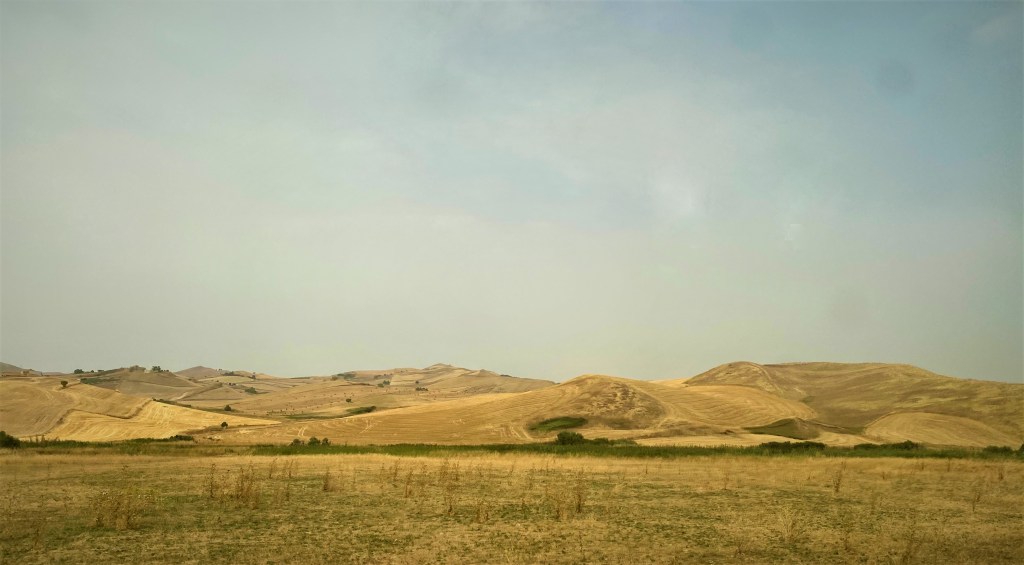
The train journey to Ragusa was a tale of two halves: the journey from Palermo to Caltanissetta, and the journey from Caltanissetta to Ragusa. The first was a fairly relaxing affair – at least after the second leg of our walk back to the train station – on an airconditioned, half-empty train through the scorched Sicilian countryside, some of it literally scorching as we trundled though it. The fires meant the train travelled more slowly – we weren’t sure if it was mandated or if the driver was ‘rubbernecking’ but we arrived about 15 minutes late in to Caltanissetta which made for a frenzied change to the Ragusa train and heralded a much less relaxing journey for the second half of the journey. The train we transferred on to was not really a train. It was an old, single-carriage locomotive with a driver’s cab and the entire thing was covered in graffiti which the locals seemed a little miffed by and the tourists, of which there were plenty, were incredulous – us included. After piling on our luggage and ourselves, we spent in excess of two hours, without air conditioning, looking at shadows of what lay outside through translucent paint of varying shades. What made the journey all the more anxiety provoking was that a few days’ afterwards we would be taking PCR tests for our onwards international flight and a positive test result would keep is in the EU past our allotted 90 days! As it later turned out, we had nothing to worry about.
Ragusa was far more relaxed than Palermo and, having not had somewhere to cool off and swim in Palermo we decided to stay in one of the few hotels with a pool in Ragusa, the Villa del Lauro. Apart from the pool, the best thing about it was the view from the loo which, as such views go, was pretty epic. But compared to the previous few days – and the second half of the journey to Ragusa – it was like arriving in an oasis of calm and luxury.
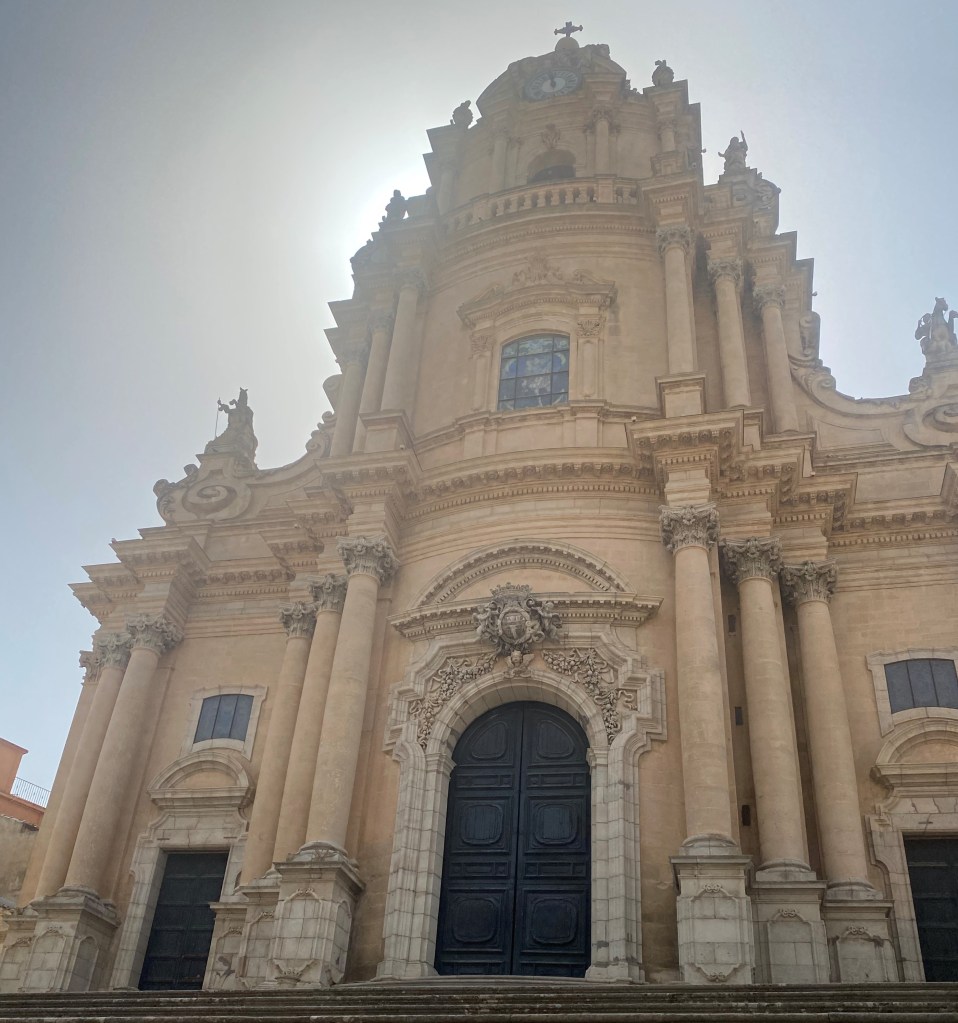
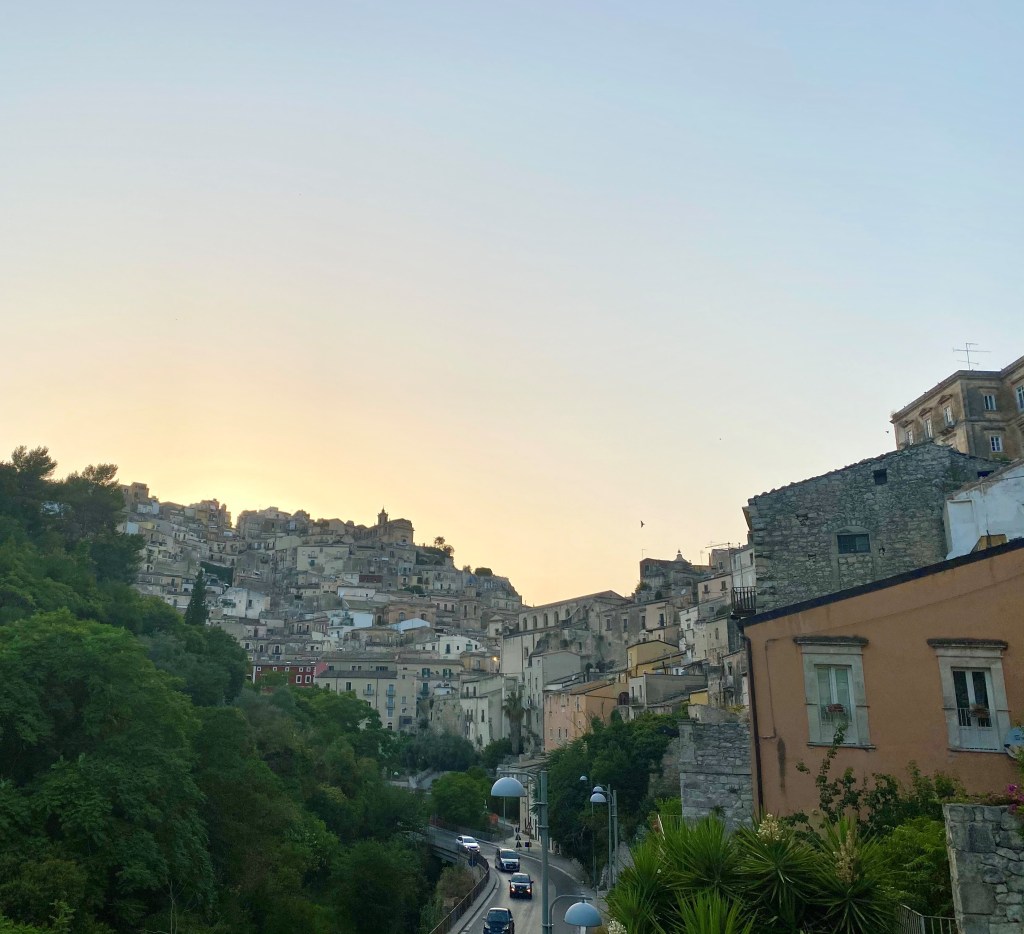
We chose Ragusa having watched a few episodes of Inspector Montalbano and enjoying the scenery as much as the programme itself, and it didn’t disappoint. To provide a little (recent-ish) history of Ragusa: after the 1693 earthquake – during which Ragusa was completely levelled – the surviving residents had differing opinions about how to rebuild it. Consequently, the smaller, lower part, named Ragusa Ilba, was rebuilt stone-by-stone to restore its previous appearance; the larger, higher part, named Ragusa Superiore, was modernised, so the streets are now in a grid formation. From the perspective of historic beauty and, moreover, how one imagines the rural Italian idyll, the former definitely was our preference. Our hotel was mercifully close – as it was still unbearably hot when we were in Ragusa – so a wander through the shadowy labyrinth with the quarterly-chiming church clocks was very pleasant (even if their chimes did not always sound harmonious), was a lovely way to spend the evenings.
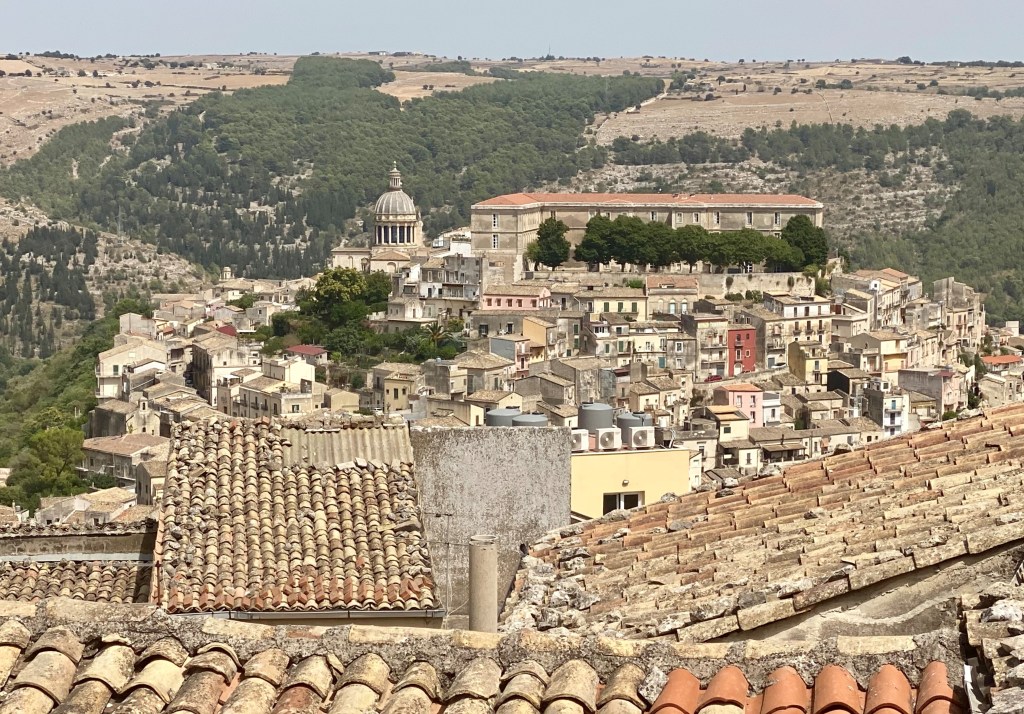
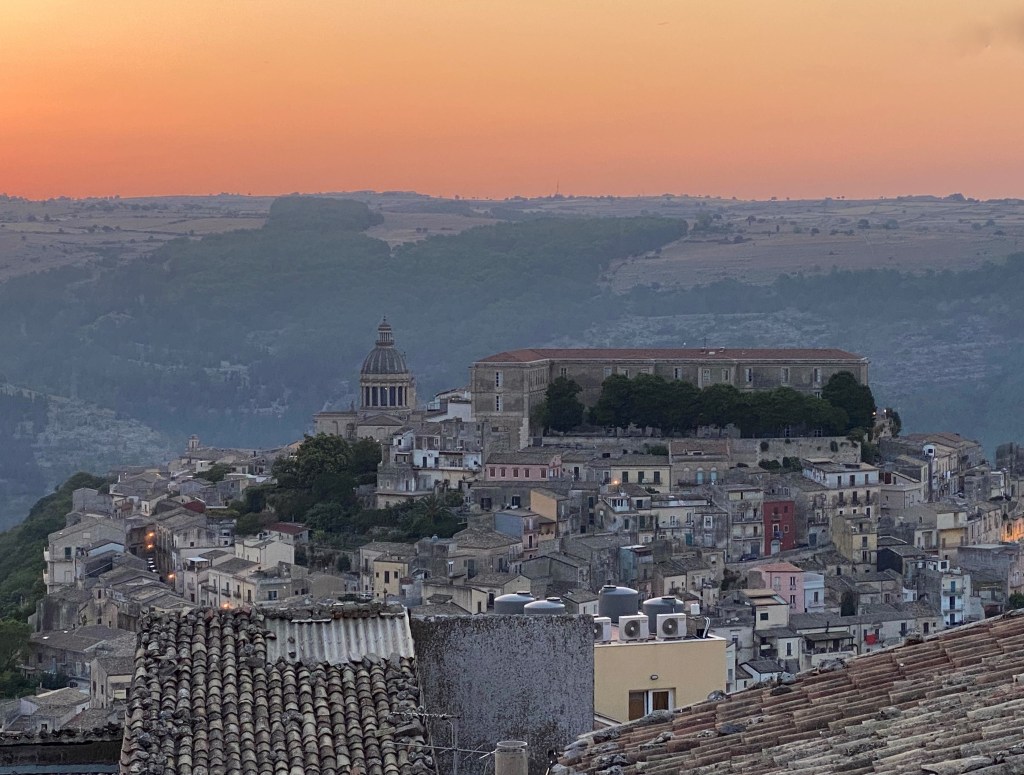
We had two of our best meals in Ragusa. One at the Taberna Dei Cinque Sensi, just off the main square in the more modern section, and the second, Reusia Bistrot, which usually only has inside dining, so had commandeered and articulated a local alley in recognition of Covid, in the older part of Ragusa. They were just about neck and neck in terms of quality, but we have not had anything to match them yet since we’ve been away. I am not sure my long list of personal trainers would agree, but there’s no such thing as a ‘bad food day’ in Italy, even if – from the perspective of calorie consumption – it’s a terrible one.
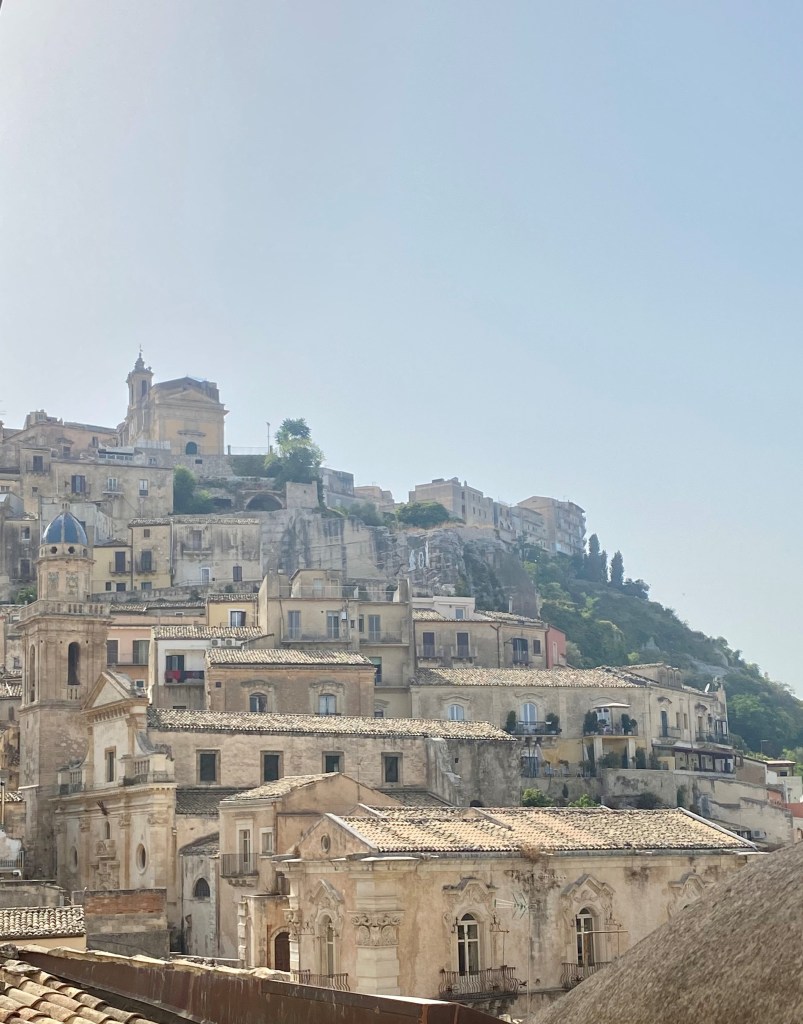
Syracuse: 14th – 17th August
The train to Syracuse from Ragusa was only an hour and, mercifully, less eventful, cooler and more enlightening – we could see out of all the windows! So that we could check straight in to the hotel in Syracuse, we took the afternoon train out of Ragusa, after a morning pottering and sampling some of the local pistachio granita, only to be hamstrung when we arrived by a couple who were refusing to check out which made for a fairly unpleasant few hours checking in – what we had hoped to avoid by leaving Ragusa in the afternoon! However, after having relaxed into the evening we had a look around the island of Ortigia which is, ostensibly, what most – us included – consider to be Syracuse from the perspective of a tourist.
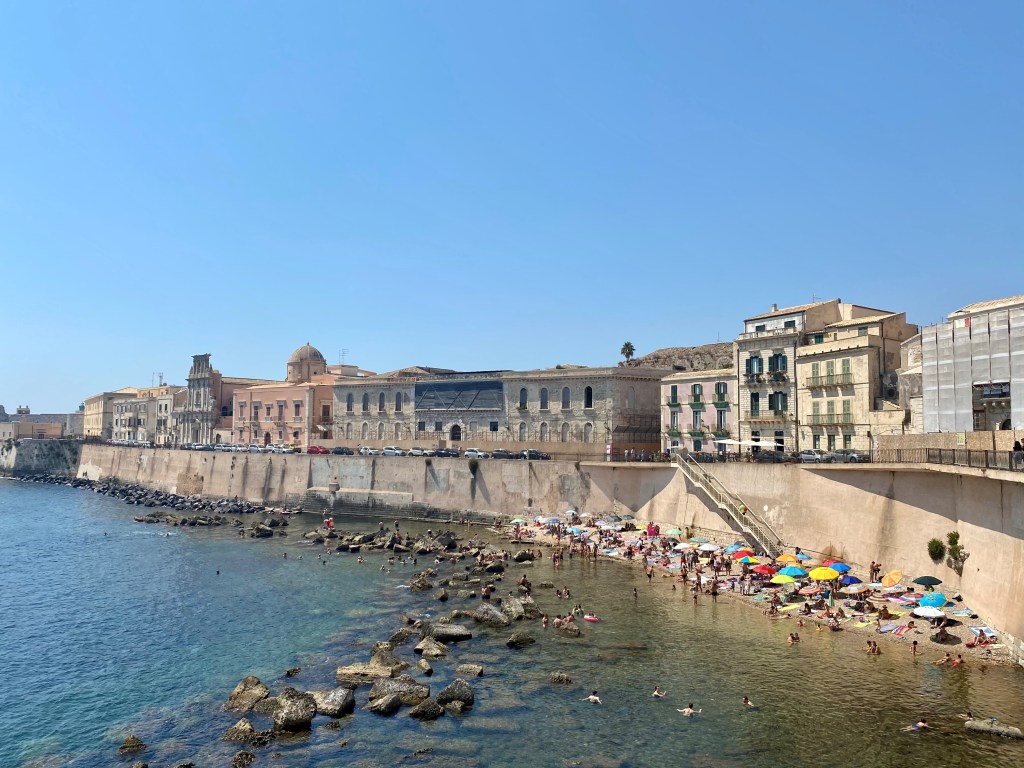
Ortigia is an island about a mile long and half a mile wide and we found plenty to occupy us for a couple of days. The markets were bustling and sold an interesting array of produce, from local herbs, spices and nuts right through to the usual fake designer bags and trainers. There were galleries and shops displaying all manner of local artwork, and musicians playing in the streets. Right around the island were the tiny inlets which had been commandeered by the locals – and latterly tourists – as beaches; there were even some decks to extend some of the more popular beaches which looked to have been put together by the local scaffolders. And, importantly, there were restaurant and bars galore to relax and cool down in as the temperatures were still stifling (it was only a few days prior that Syracuse had registered the hottest ever European temperature, 48.8c).
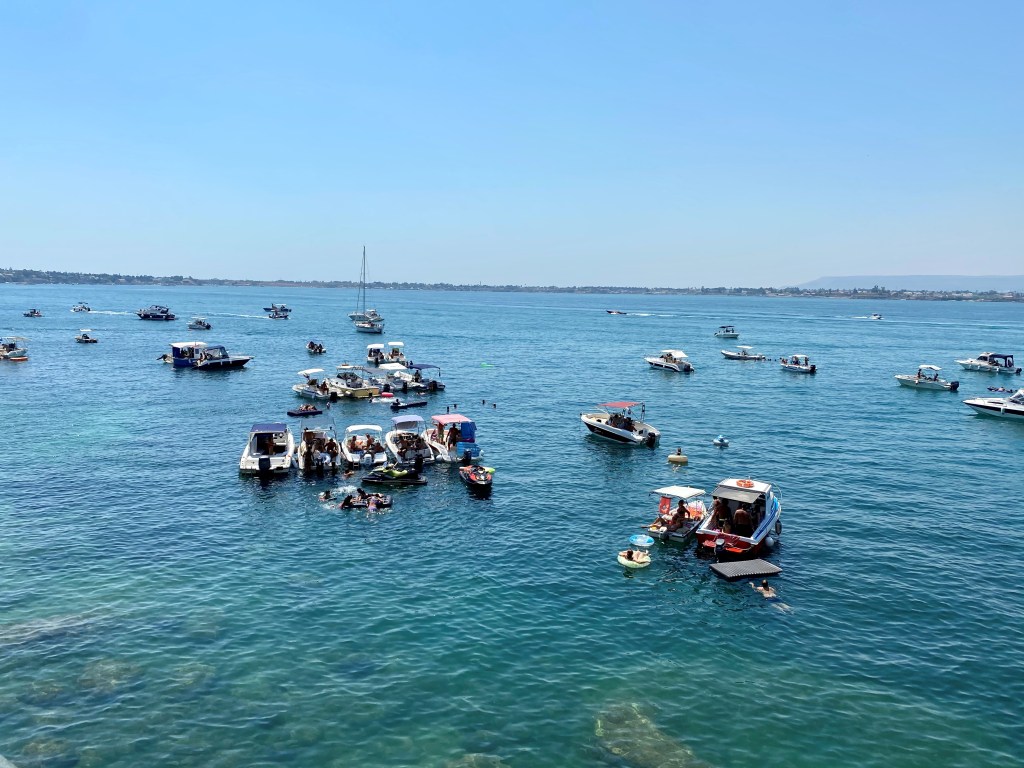
Unlike Ragusa, there was a younger feel about Syracuse – or Ortigia specifically. Perhaps it was the presence of the ocean and, resultingly, places for youngsters to lounge around for most of the day without the scorn or judgment of their parents. Or perhaps they were just on holiday or just flocked to the beaches for the day from some of their more rural residences. It gave the place a little bit more energy, particularly in the evening, as some of the beach bars had DJs or played music late into the evenings.
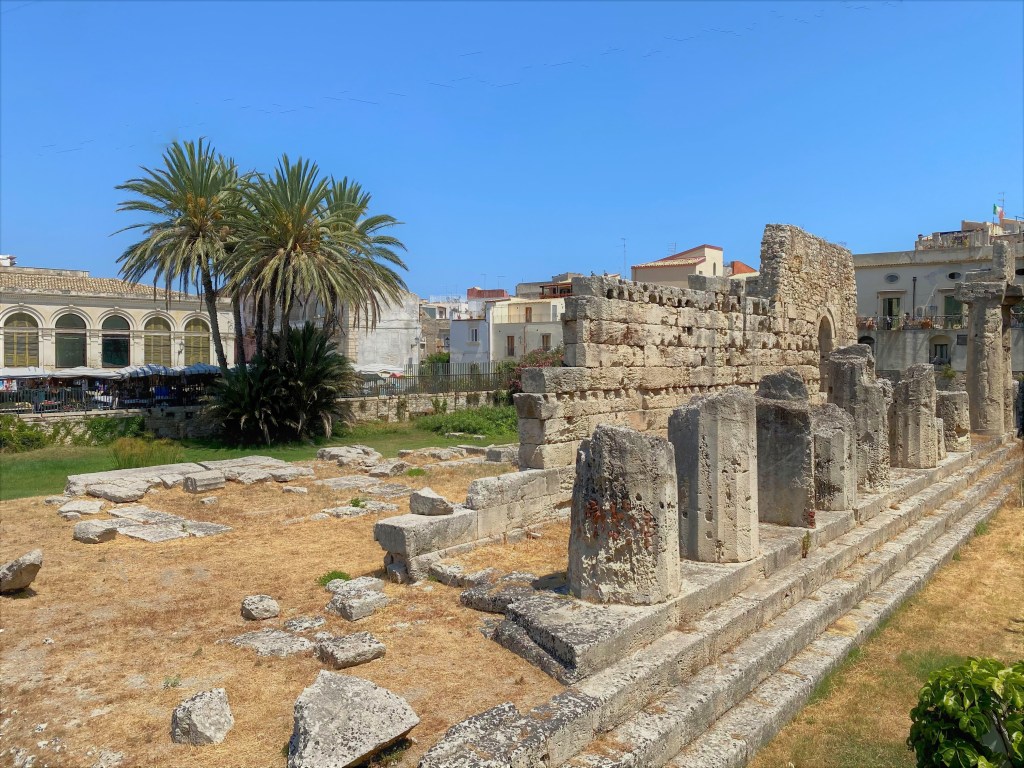
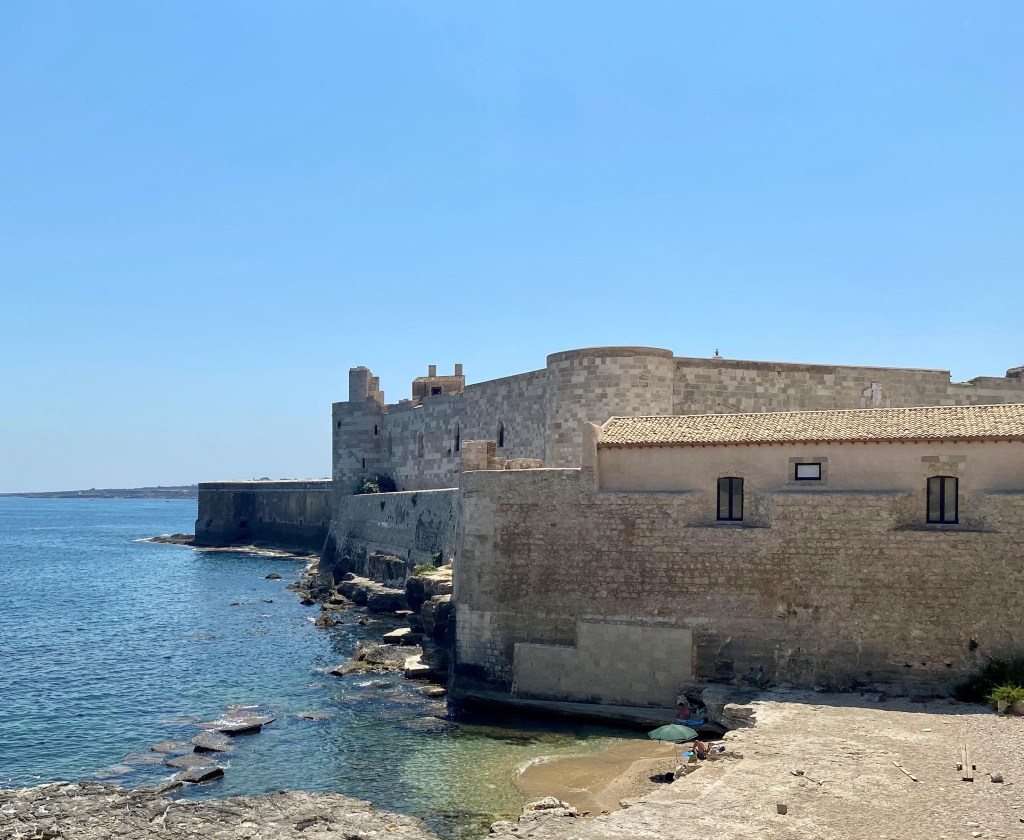
By this point of the trip around Sicily, we were starting to wind down and think about what lay ahead. We spent most of our penultimate day rushing around getting PCR tests as the flights to Casablanca were booked and, irrespective of our experience travelling from Greece to Italy, we were – and still are – taking the testing procedures very seriously to ensure safe passage from one place to the next, both for us and everyone else.
 offthegridforabit.com