
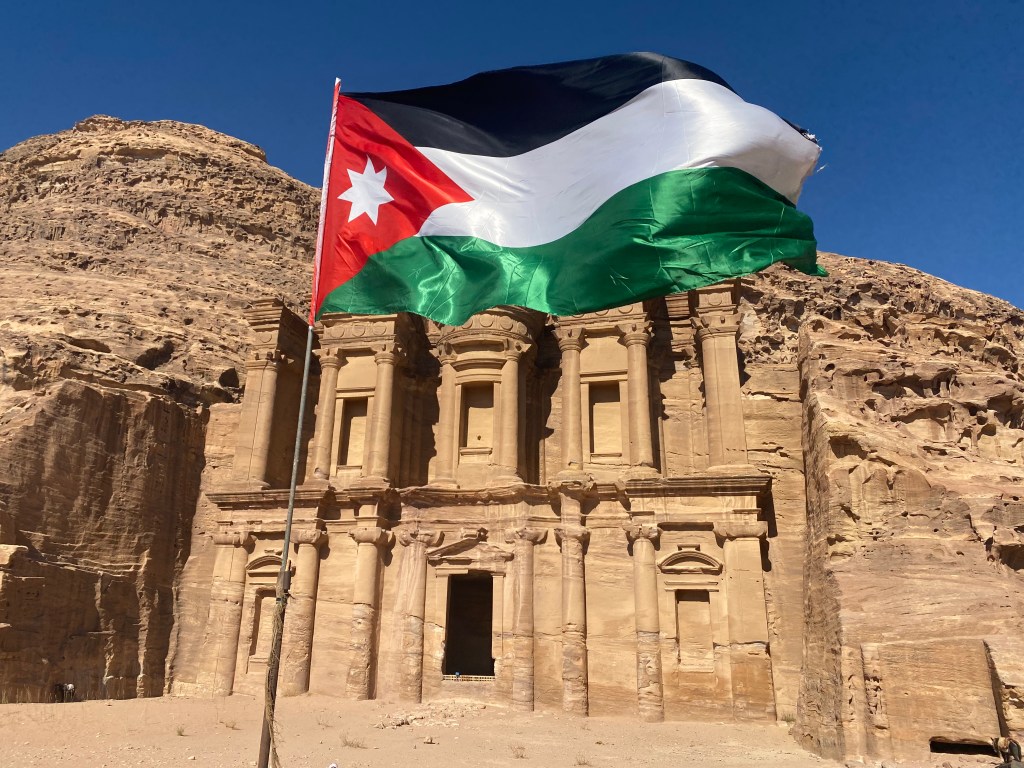
Amman: 24th – 30th September
The main reason for choosing to visit Jordan was that, back in March when we were investigating from where we could fly cheaply to Sri Lanka, it prevailed as being that place! So it was really only by accident that we ended up in Amman for nearly a week. We had met a few people on our journey through Morocco and Egypt who laughed mockingly at our lack of knowledge about Jordan and what must have superficially seemed like contempt for a place which we discovered to be so abundant in things to see, so historically significant and where the people were so incredibly welcoming.
We stayed in Amman for the entire of our visit. Again, this was more from not having any previous experience of Jordan nor feeling we had enough time (or the inclination) to move around every day from one place to another on spec. We had a look around Amman when we arrived and thought how unlike our preconceptions of what it might look like it actually did. Most people were dressed much like they would be in a European capital city, perhaps a little more conservatively considering the heat. Everyone was welcoming and friendly and not once did we feel in any way threatened or intimidated – as we had in parts of both Morocco and Egypt. Amman also had a more cosmopolitan feel about it than any of its comparable cities in the two aforementioned countries. Our initial impressions were happily, therefore, in stark contrast to what we expected.
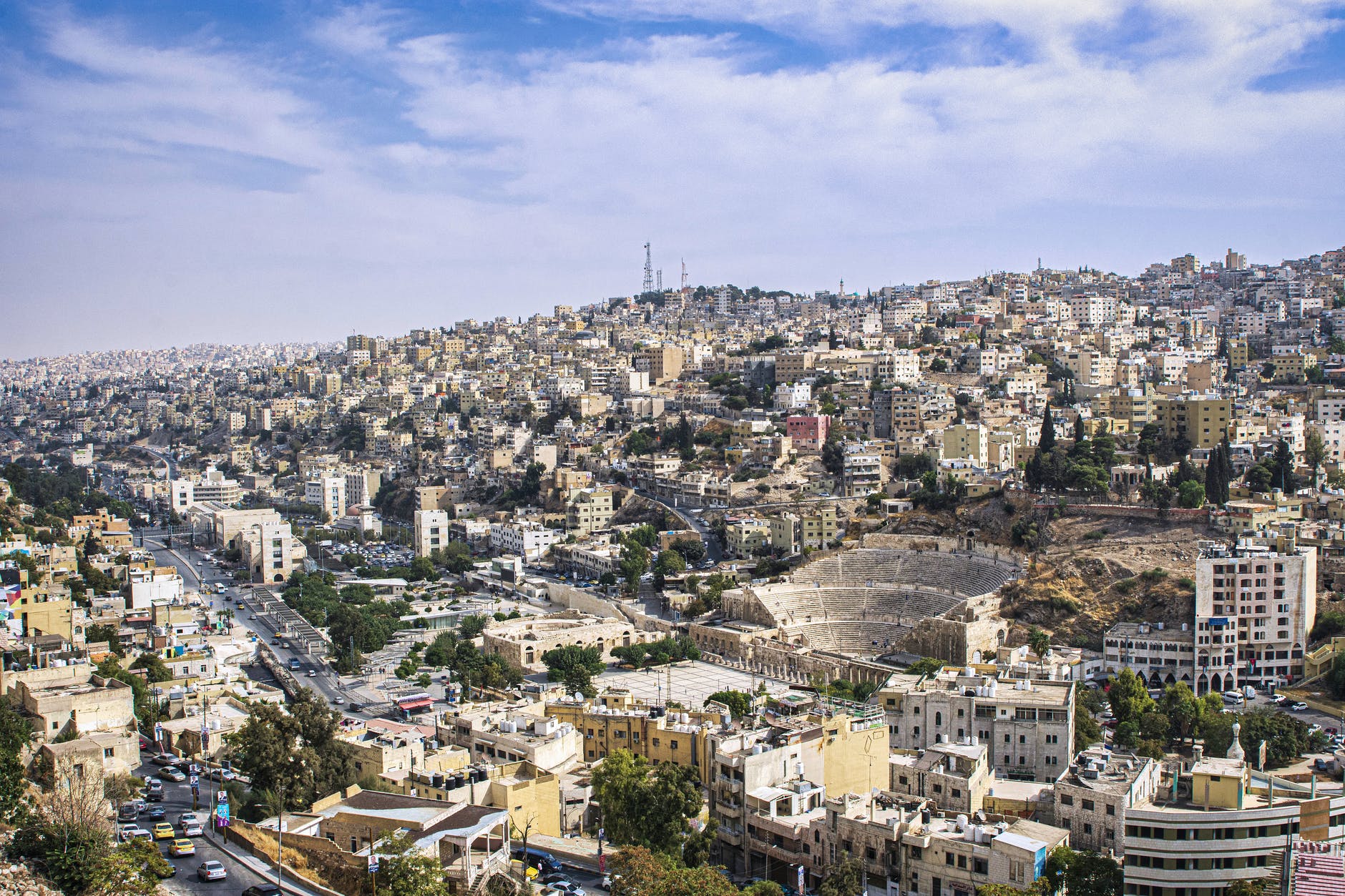
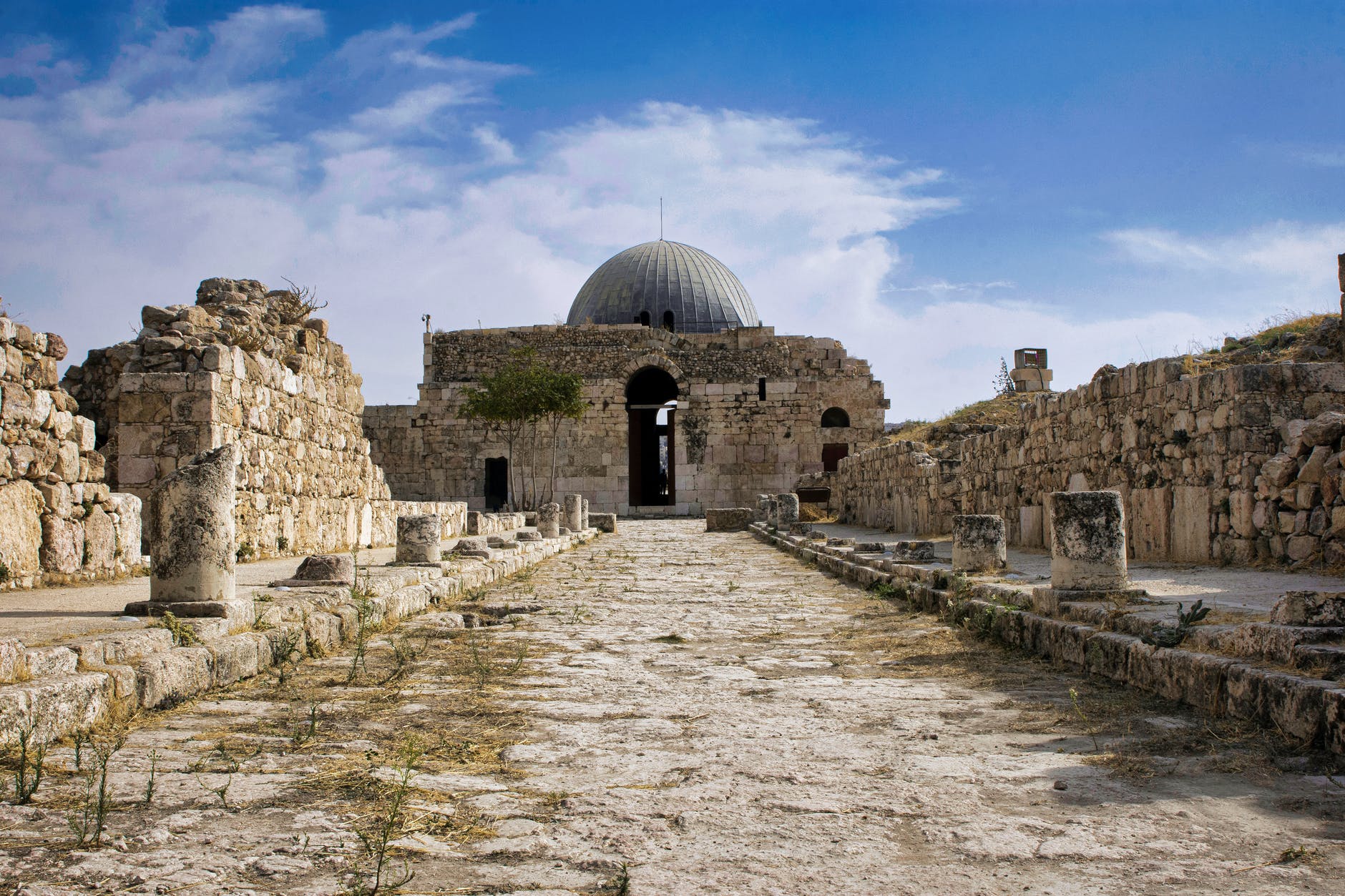
During our walk around Amman and between Arabic coffees we decided to enlighten ourselves about Jordan and took shelter from the heat of the mid-afternoon sun in The Jordan Museum. This had multiple benefits of being cool and relatively dark, as well as the more important explanation of the history of Jordan and all of its relics. I am not always a huge fun of museums as I would usually rather be outside doing something active than inside doing something passive, but both of us were completely captivated by everything that the museum had to offer: historical and religious significance of Jordan, the history of its peoples, the evolution of language, its trade routes and even things about contemporary ways of dealing with water shortages in its deserts (reduction of desertification). It is fair to say, the museum whet our appetites enough to hire a car for the four full days we had there and to set off on some fairly lengthy drives around the Middle East.
Wadi Musa and Petra
We had the hire car dropped off at the hotel, so getting out of Amman was a baptism of fire. The car was a ten-year old Chevrolet hatchback with dents and scrapes and a radio which we could turn down but not off. This intensified the stress as the near death experience at every junction as they were all accompanied with Arabic pop music of varying volumes. I seemed to be the only person on the road who didn’t think that indicators and road markings were purely decorative.
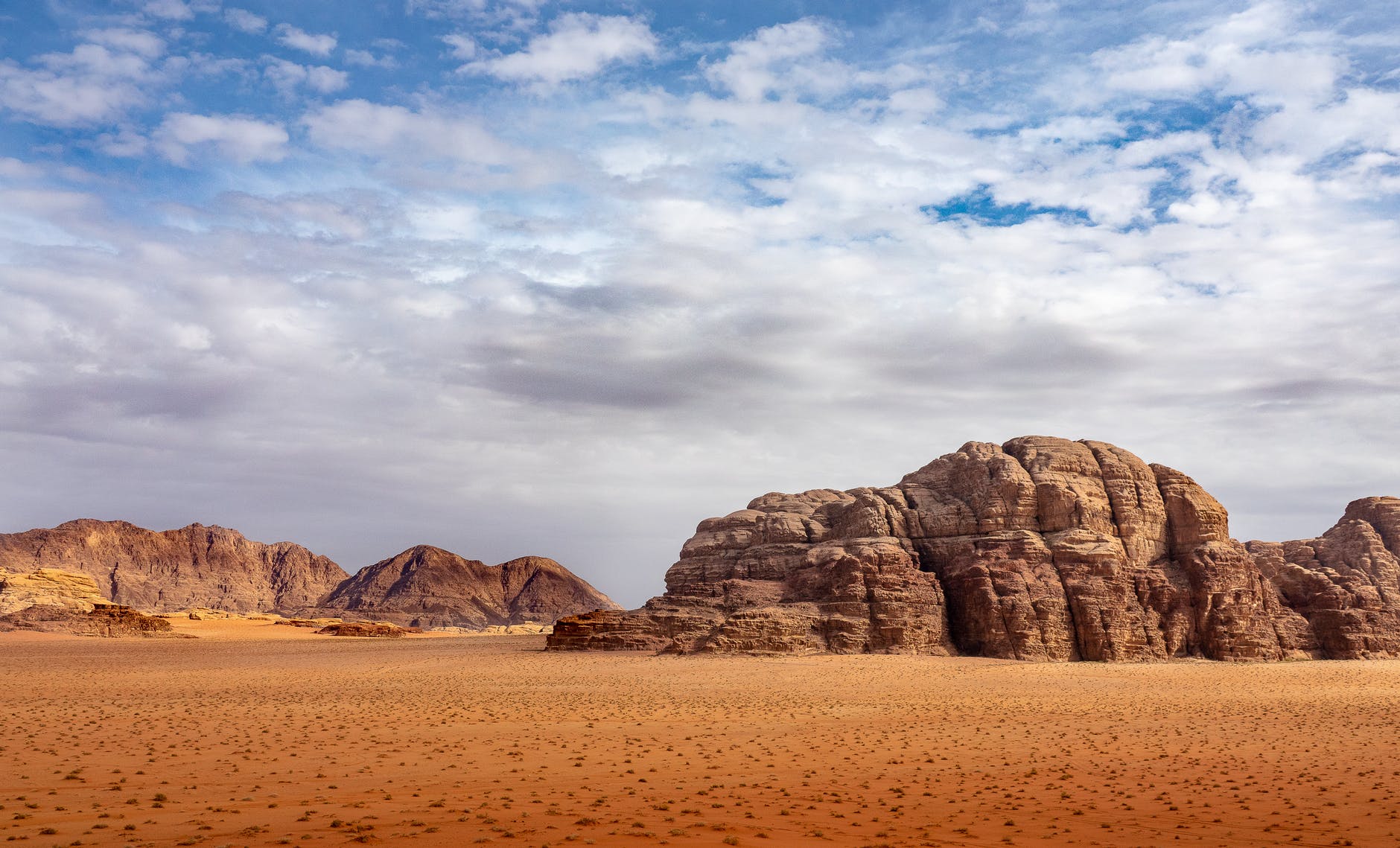
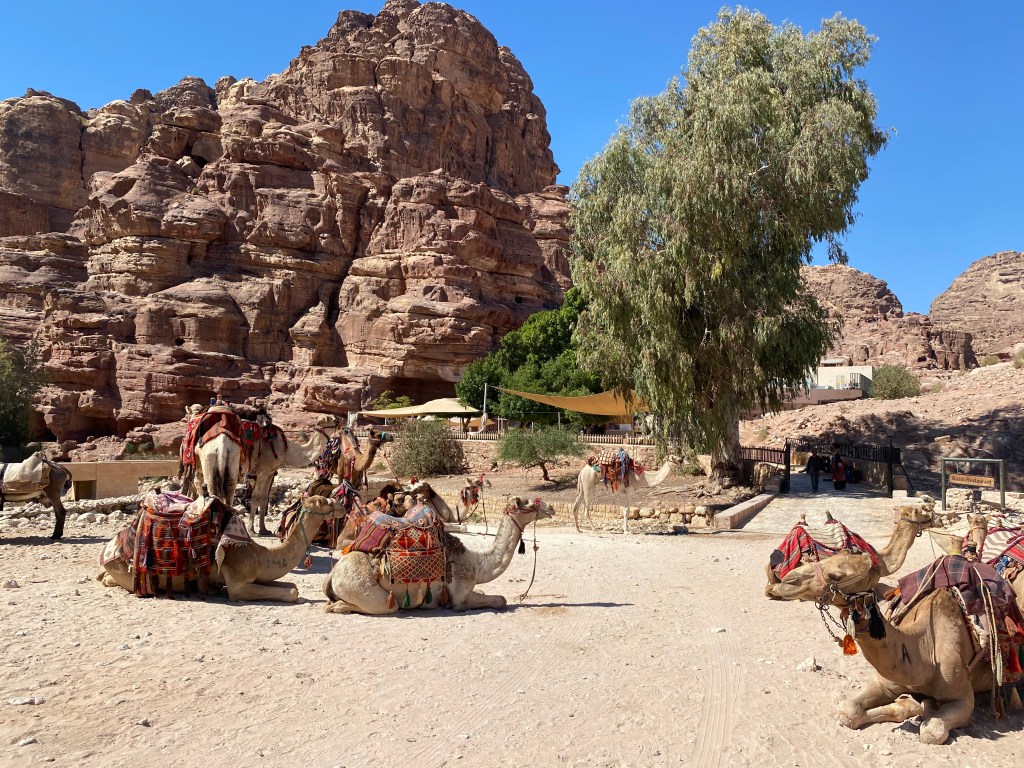
Once we were out of the city, we hit the highway south (on which there was an incongruous Ikea) for about 200 miles going through numerous little towns in the middle of the sprawling desert. As we approached the turn off for Wadi Musa, there were fewer towns and those there were looked much smaller which – apart from the other cars on the road – produced a feeling of being genuinely in the middle of somewhere quite remote. After the turn to Wadi Musa, the cars too began to disappear yielding to camels as the primary mode of transport.

Petra itself is a huge site and we knew a day was probably not going to be enough to walk around the entire city. We were there probably for about six hours in total and walked 25,000 steps and 70 flights of steps (according to the iPhone) and were both completely knackered when we got back to the car. The sun was setting which made for a long drive home in the dark along an unlit highway, the only source of light being other drivers’ full beam headlights which seemed to be the default irrespective of how busy (or not) the road was.
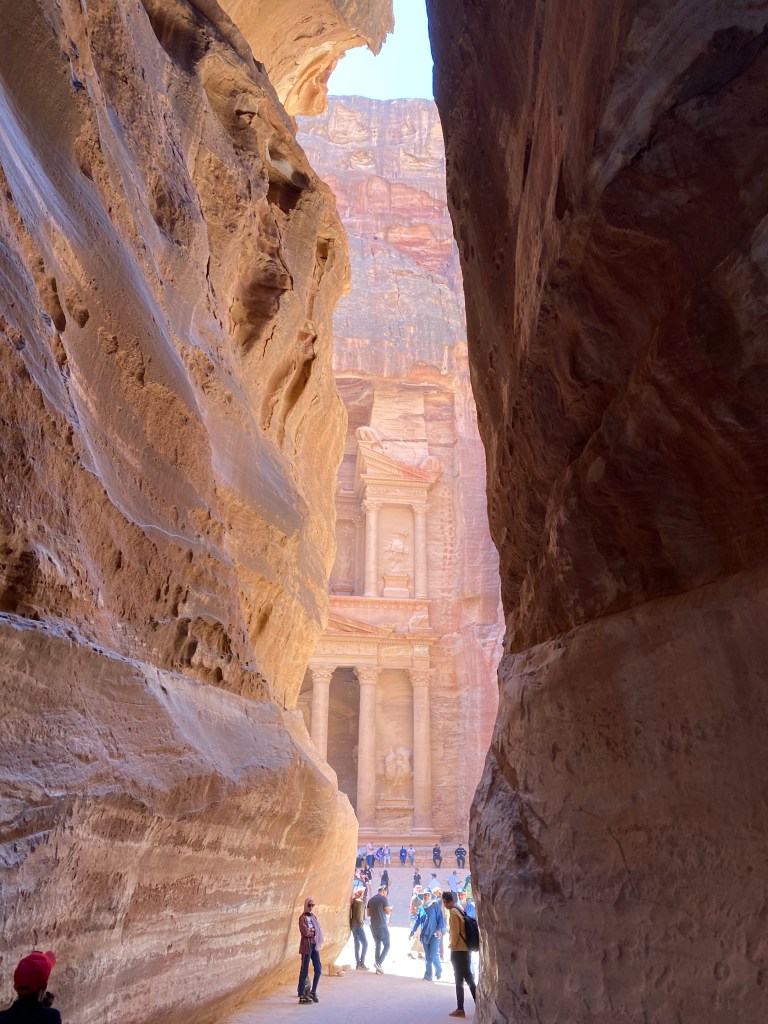
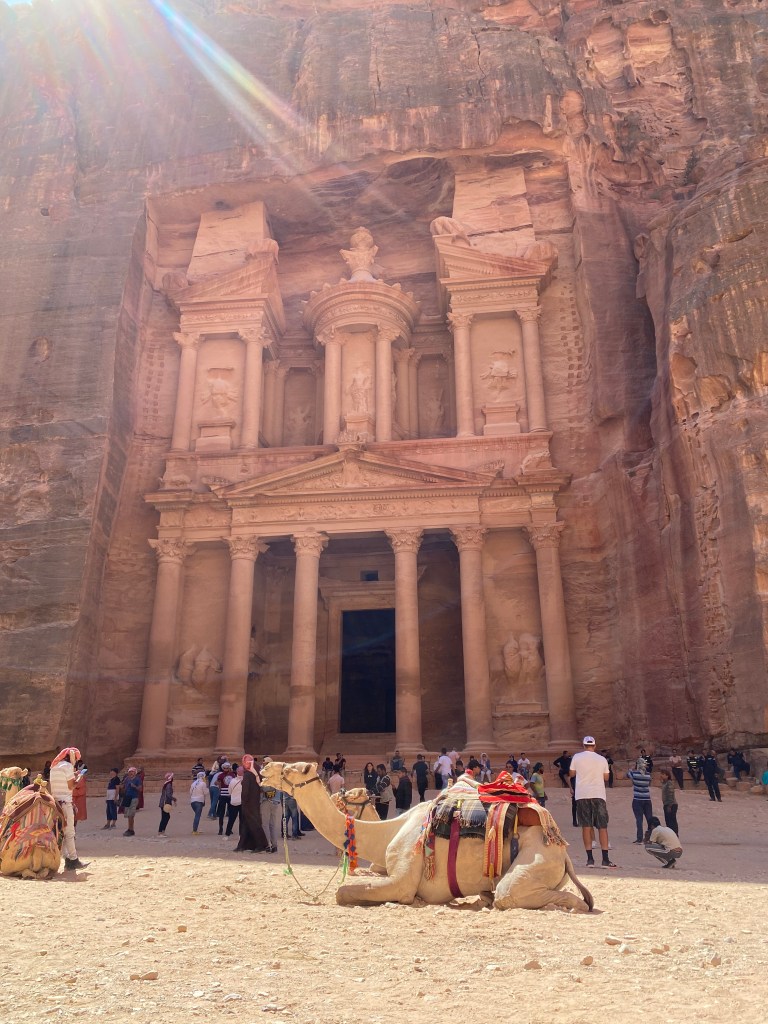
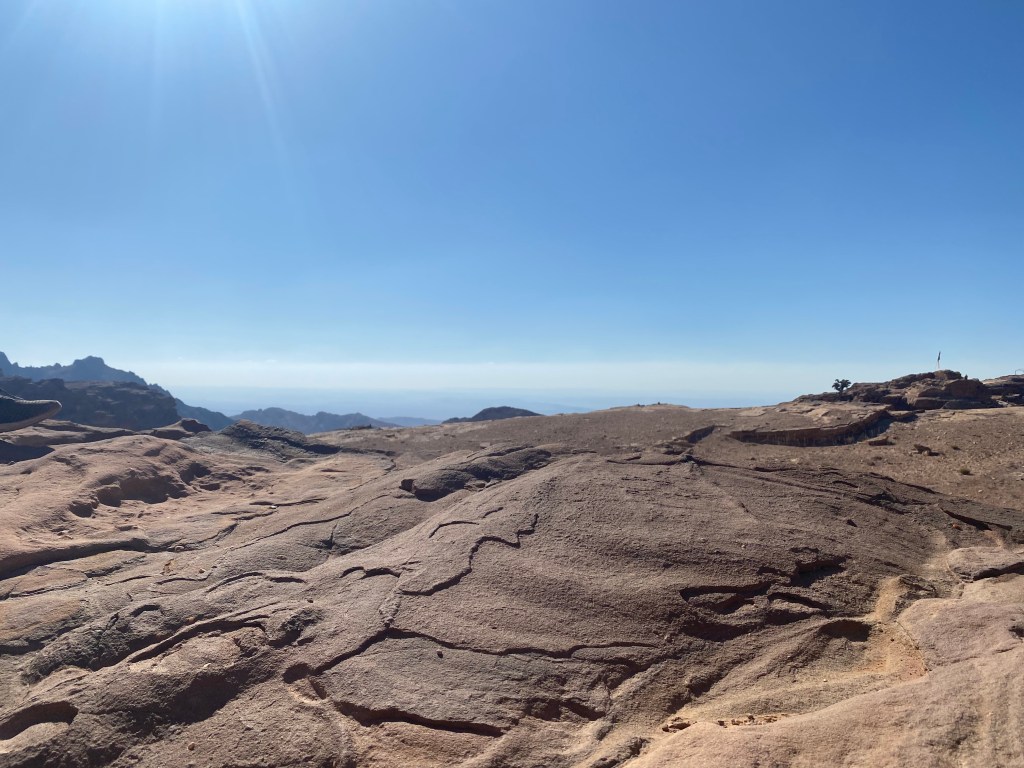
The Treasury in Petra is about 120 feet high and 100 feet wide. The Monastery (scroll down) is larger still, about 150 feet square, which is awesome when one considers their age, c. 2,500 years, and the level of intricate detail in the sculpting. Much like Morocco and Egypt, the light and visibility is incredible so it was fairly straightforward to get some lovely photos with the iPhone.


The Dead Sea
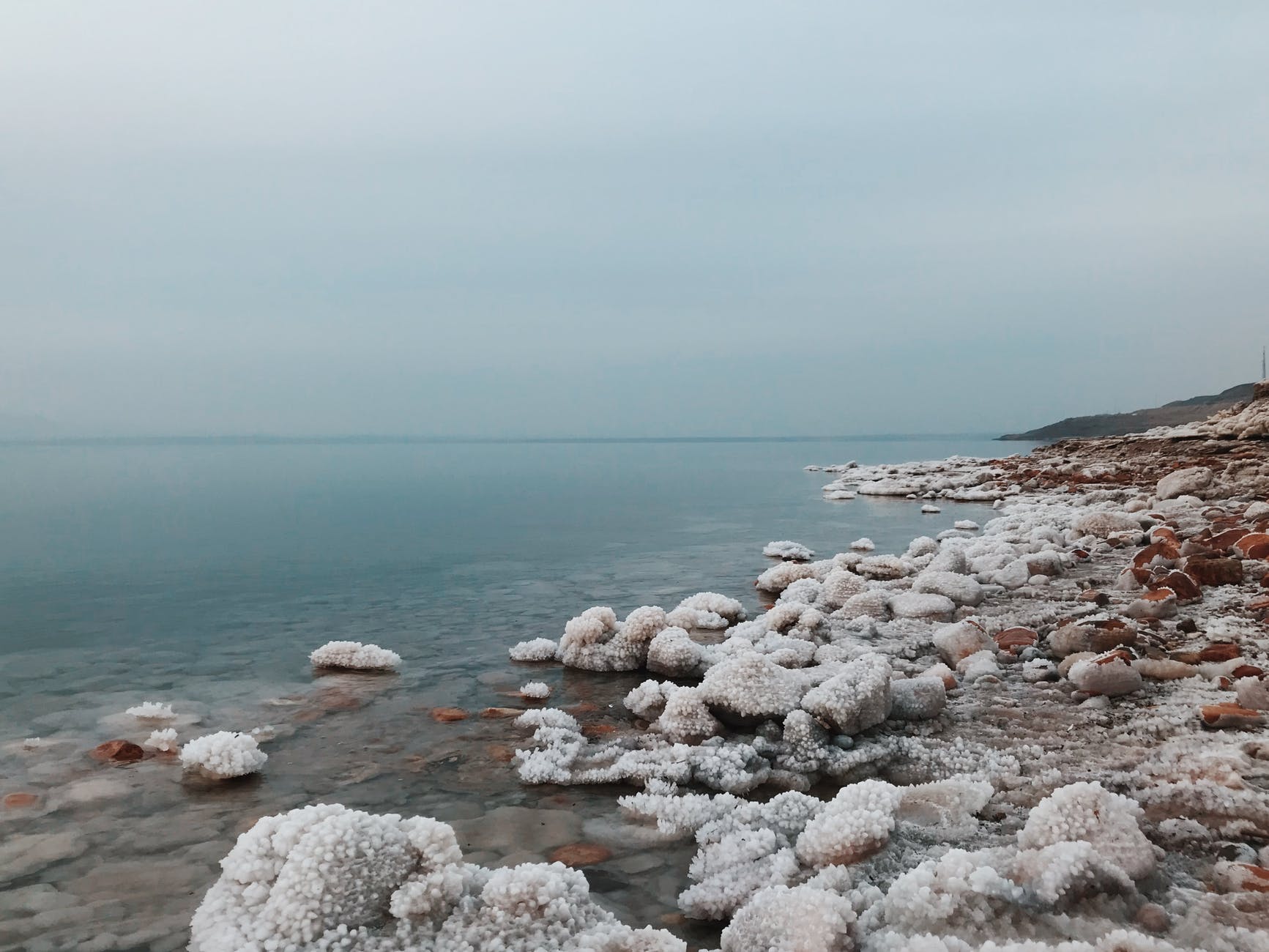
The drive to the Dead Sea from Amman is, perhaps unsurprisingly, a long downhill as it sits nearly 1,500 feet below sea level. It makes for some lovely views in the latter part of the journey but there is a lingering haze which meant the photographs we took did not really do it justice. The temperature really starts to pick up towards the sea itself, topping 40c (Amman by comparison was about 30c when we left). The coastal road had an unnerving number of sizeable repairs where long stretches of it had fallen in to the numerous large sinkholes which had appeared due to the continually receding coastline.
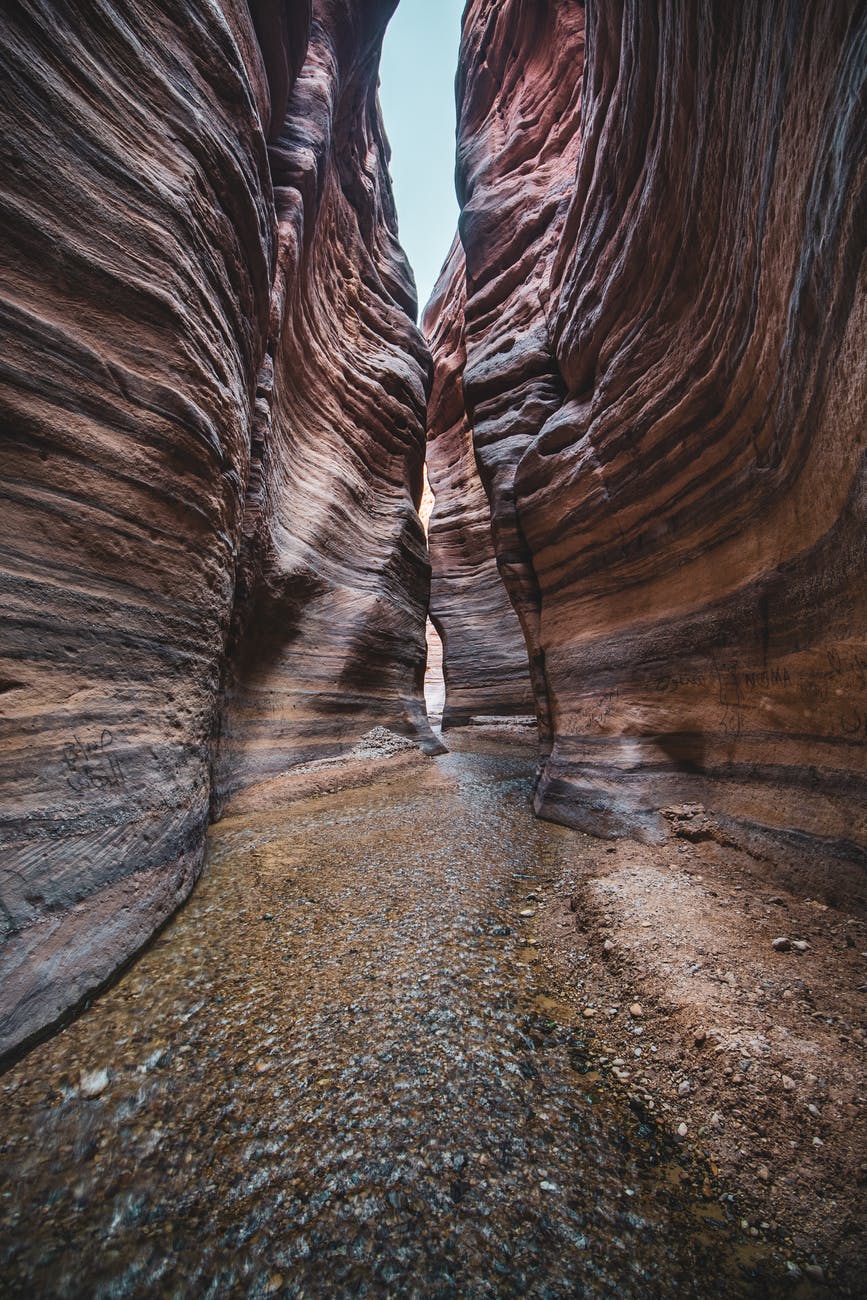
We drove along the coast of the sea as far south as Wadi al Mujib, a river canyon in the banks of the Dead Sea. We opted for the shortest of the three walks in to the canyon as we were a little suprised by how expensive it was to walk up a river against its flow! It was mercifully shady and the water was cool, so the couple of hours we spent there were pleasant enough but we also wanted to check whether it would be possible to sweettalk our way in to one of the large hotels on the bank of the Dead Sea for the afternoon.
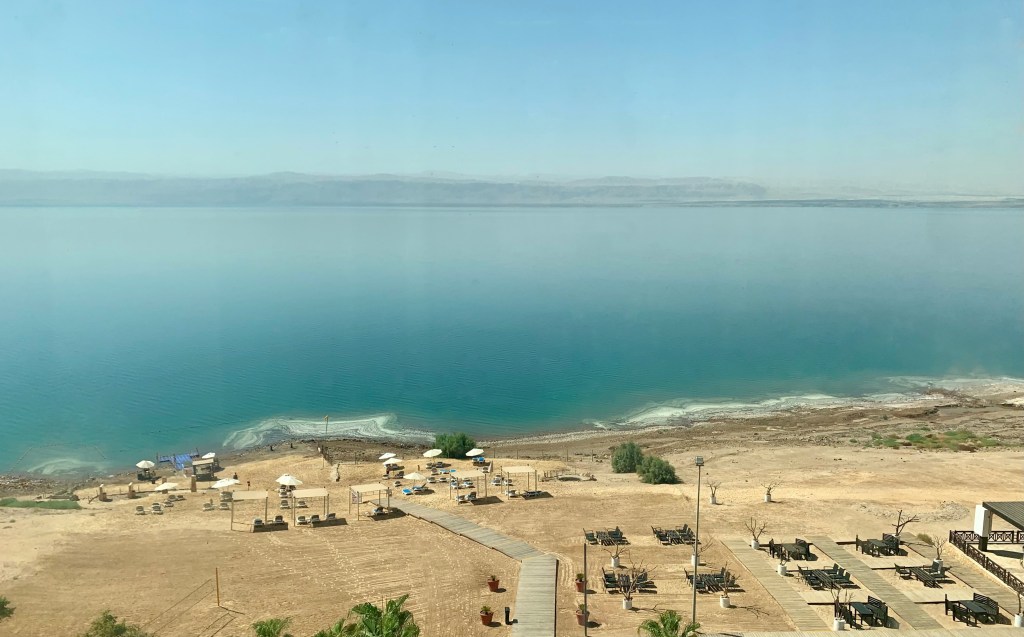
We had read some of the hotels offered ‘day passes’ in low season so we called in at the Crowne Plaza and ended up getting admission to the hotel, all of its leisure facilities and lunch. It certainly wasn’t like any Crowne Plaza I had ever stayed in back in the UK which from memory had been fairly dour places where businesspeople crash for a night. Far from it: it was a palatial complex with multiple restaurants, cafes, bars and pool area. But we were primarily there for the Dead Sea beach and spa.
Low season does not provide an adequate portrayal of just how few people were at the hotel. We were one of three couples on the beach which meant we had almost the sole attention of the lifeguards who fortunately doubled up as incognito beauticians who were expert at administering mud and salt. Afterwards, when we moved on to the spa, we were the only people in there, so had a sauna, steam room, and choice of five pools – one of which had Dead Sea water in it.
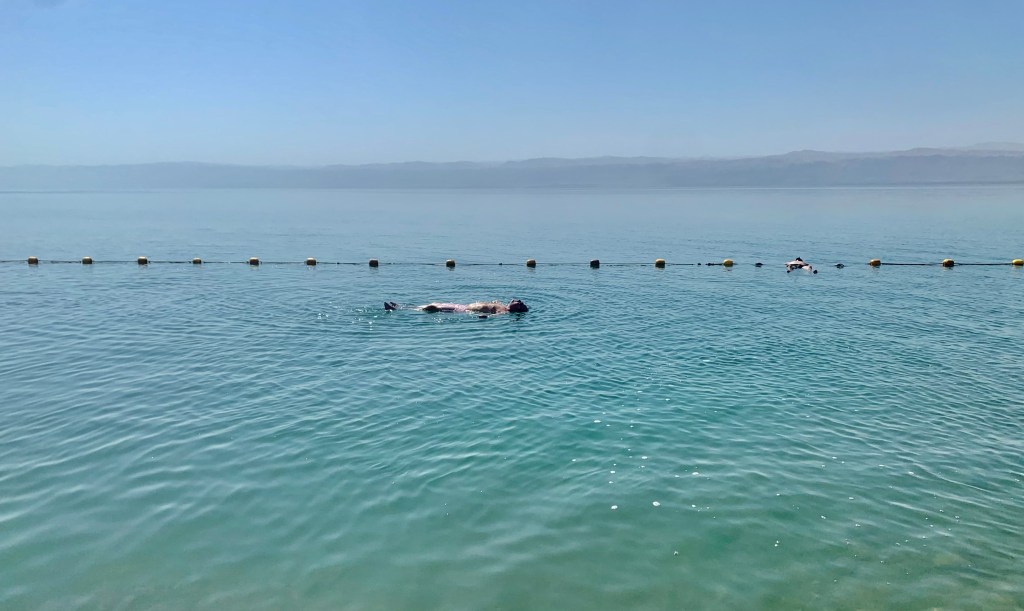
It is difficult to convey the sensation of being in the Dead Sea. It is something one has to experience to believe it possible. I guess it feels similar to being in zero-gravity. Once I began floating on my back in water deeper than I am tall, it was very difficult to right myself so I had to float back to shallower waters so there was something to grip on to with my feet.
Baptismal Site of Jesus Christ
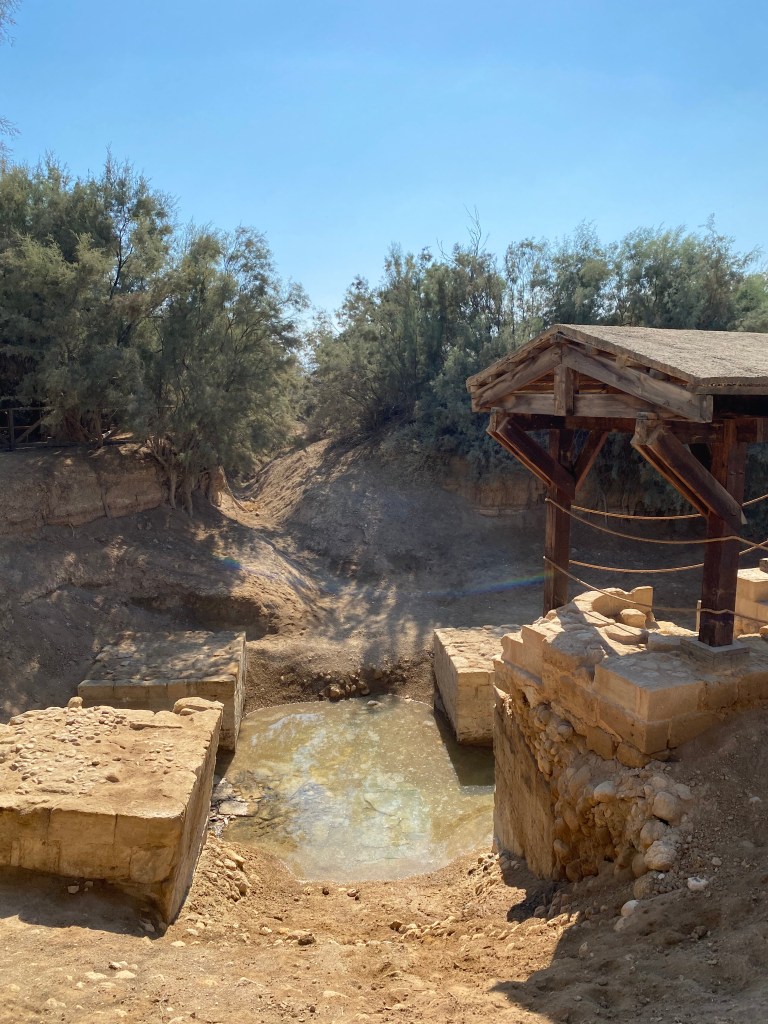
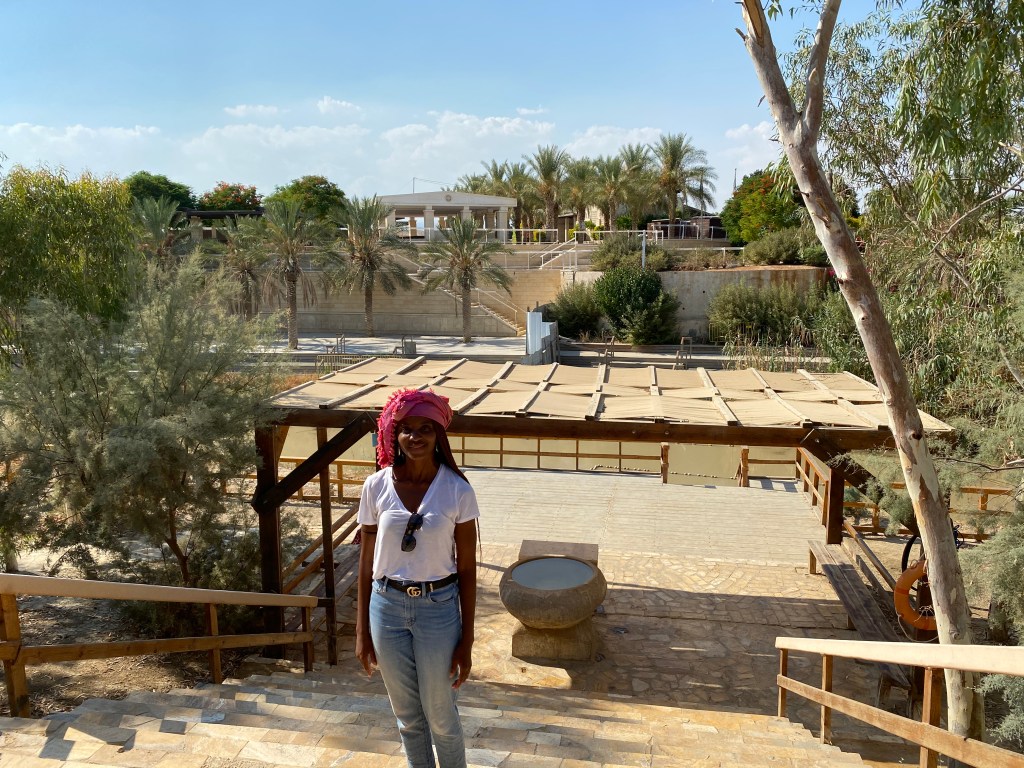
Given the road to the Dead Sea was also the road to the baptismal site of Jesus Christ – we did not know this initially, but it was heavily signposted – there was little chance I was going to get away without a visit. It was a great experience and is probably closer to the West Bank than I ever thought I would get. Like many of the tourist sites we have visited, it was clearly geared up for many more of tourists than were there. In our tour of the site, there was us and a French couple. The bus that took us down there would have sat 30 people and the walkways were clearly set up so that a long line of visitors would all shuffle past the site, take a picture and move on.
We absolutely loved our time in Jordan and will certainly return, perhaps again on this trip should time permit. There is so much more we (now) want to see: Jerash, Wadi Rum and Mount Nebo to name but a few. I think I should reiterate that – in addition to all of the amazing things we experienced – the people are amongst the most welcoming and hospitable either of us have ever encountered anywhere in the world.
 offthegridforabit.com